
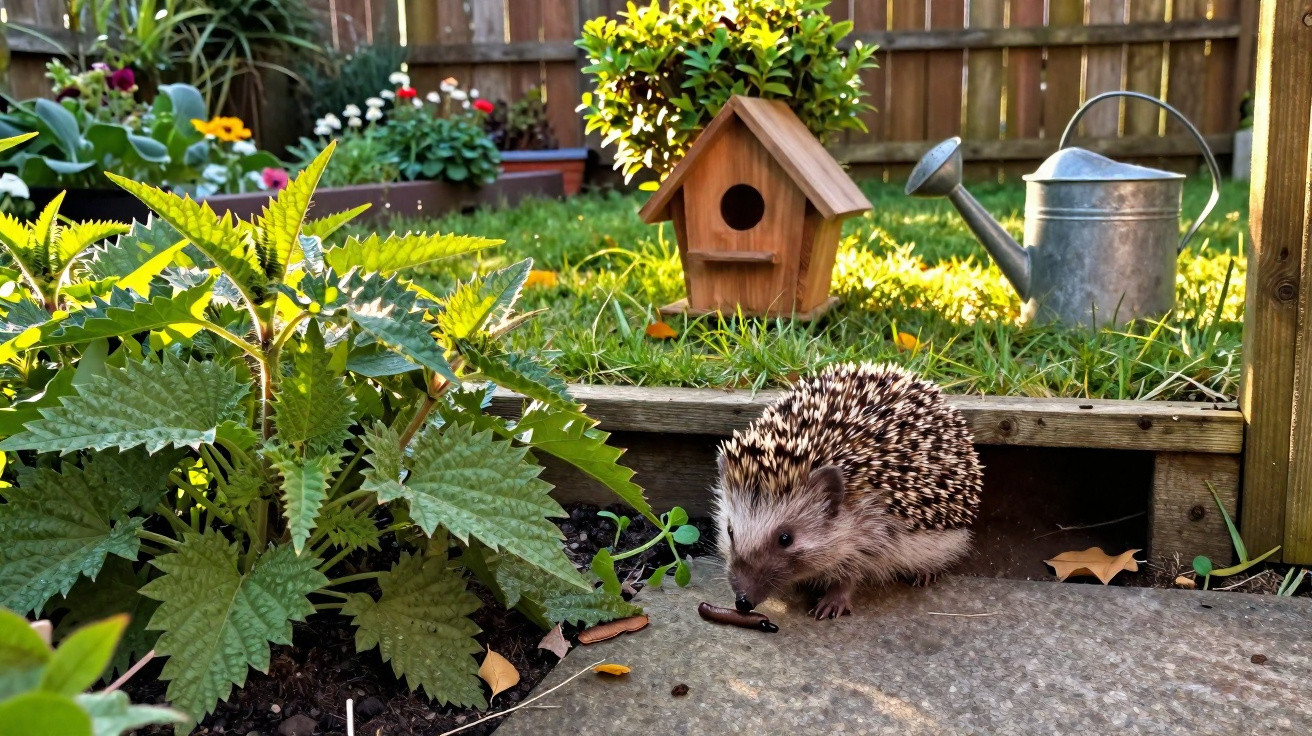
Between sharply edged lawns and perfectly clipped hedges, it looks like the troublemaker of the garden: the nettle. Leave it standing and you can be labelled careless in no time. Yet behind that prickly reputation sits a small ecological marvel. Nettles offer shelter and food - and they can help turn your garden into a haven for hedgehogs, which in turn reduce slugs and other unwanted pests.
Why nettles attract hedgehogs like a magnet
The modest-looking nettle - especially the annual small nettle (Urtica urens) - does several jobs that suit hedgehogs perfectly. Its stinging hairs discourage larger animals and create a natural barrier. For a hedgehog, a dense strip of nettles translates into safe cover.
"The nettle acts like a green protective bunker - ideal for hedgehogs that need peace and safety during the day."
Among the nettles, a hedgehog can:
- rest undisturbed during daylight,
- raise its young in a sheltered spot,
- escape the heat and pressure of an overly tidy garden.
There is another advantage too: nettles draw insects in huge numbers. Aphids, caterpillars and larvae - what many gardeners see as a nuisance is, for hedgehogs, simply a "buffet".
That combination creates a small but effective mini ecosystem. The plant provides cover while also boosting the local food supply. As a result, a nettle patch can become a near-perfect habitat within just a few square metres.
A curious behaviour that may be useful
People who watch hedgehogs often report that they sometimes deliberately rub themselves against nettles. Science has not settled on a single explanation yet, but two ideas come up repeatedly:
- The hedgehog may be trying to dislodge parasites such as fleas and mites.
- The sensation on the skin could work a bit like a massage and stimulate circulation.
Similar tactics are seen in birds that take "ant baths" to help tackle lice and mites. It is possible that hedgehogs use nettles for a comparable self-care trick.
The hedgehog as the perfect partner against slugs
Many gardeners know the scene after a damp spring evening: young plants chewed down, leaves riddled with holes, lettuces reduced to little more than skeletons. Slugs are often to blame - and this is where hedgehogs become valuable allies.
Their menu typically includes:
- slugs and snails,
- small shelled snails,
- caterpillars, chafer grubs and other larvae,
- various harmful insects,
- earthworms and beetles.
"If you attract hedgehogs into the garden, you can skip many poisonous baits - the spiny little back does the slug work at night all by itself."
In this way, the hedgehog becomes a quiet helper that supports balance without chemicals. It eats what damages plants and, in doing so, helps keep vegetable beds and ornamental plants in better condition.
How to make your garden hedgehog-friendly
You do not need major landscaping to encourage hedgehogs to stay. A few straightforward steps are enough - and nettles are one of the key building blocks.
A small nettle corner is more than enough
No one has to turn the whole garden into wilderness. A contained patch can do the job. Aim for a small zone that is allowed to remain a little wild:
- a nettle corner by the fence or behind the shed,
- near a log pile or a heap of leaves,
- paired with an untrimmed hedge or a line of shrubs.
There, hedgehogs get cover, nesting material and plenty to eat. If you like, you can also mow part of the lawn less often so the area develops in a more natural way.
Passages, not fortresses: making fences hedgehog-friendly
Many gardens are sealed off completely. For hedgehogs, that can become a dead end - and in the worst cases, it turns dangerous if they can no longer reach food or find a mate. Fortunately, it takes only small changes to put this right.
Useful options include:
- cutting openings of around 13 centimetres in wooden fences or solid garden fencing,
- leaving small tunnels beneath wire mesh fencing,
- checking walls for gaps a hedgehog can squeeze through.
"A closed-off plot can feel like a trap to hedgehogs - small passages turn individual gardens into a connected network of habitats."
A simple hedgehog house you can build yourself
If you want to roll out the red carpet, provide a shelter. It does not need to be an expensive specialist product - a few wooden boards are enough to put together a basic hedgehog house.
Key points are:
- rough, untreated wooden boards with no paint or chemicals,
- a low, tunnel-like entrance facing away from the wind,
- dry bedding inside, such as hay, straw or dry leaves,
- a location under shrubs or behind nettles.
This creates a safe sleeping spot, and in winter it can even serve as a hibernation quarters.
Keep away from poison - and please, no milk
Anyone wanting to protect hedgehogs should largely avoid chemical treatments. Slug pellets are particularly risky. Even if a hedgehog does not eat the pellets directly, it may consume poisoned slugs - with sometimes fatal consequences.
Feeding can also go wrong. Many people kindly put out milk, but it is a bad idea for hedgehogs: their digestive system struggles with lactose, and diarrhoea and serious stomach and gut problems are common results.
Better choices are:
- a shallow dish of fresh water,
- if needed, a little good-quality cat food without sauce,
- in dry, hot spells, several water points around the garden.
Nettles: weed, super-plant - or both?
Nettles are not valuable only for hedgehogs. They are genuine all-rounders, and plenty of gardeners already use them deliberately.
Practical uses include:
- Nettle liquid feed: a natural liquid fertiliser for heavy feeders such as tomatoes or squash,
- Plant tonic: sprayed on leaves when diluted, it helps strengthen plants,
- Habitat: a food plant for butterfly caterpillars, including the red admiral and peacock,
- Wild vegetable: young shoots work well in soup, pesto or as a spinach substitute.
"If you only see nettles as an annoying weed, you are giving up fertiliser, animal food, wild vegetables - and one of the best hedgehog magnets going."
In the kitchen, young nettle leaves can be surprisingly spinach-like. Once cooked, they lose their sting. Many people use them in quiches, pasta fillings or as a green addition to a smoothie.
How your garden becomes a mini nature reserve
A little well-intentioned "mess" creates valuable refuges. A nettle patch, a pile of leaves, a wilder hedge edge - none of it looks dramatic, but it can do a great deal for biodiversity.
When you support hedgehogs and other beneficial wildlife, you gain on several fronts:
- less slug and insect damage on vegetables and ornamental plants,
- reduced reliance on chemical plant protection products,
- more life in the garden: birds, butterflies, toads, ladybirds,
- a natural cycle of eating and being eaten that is steadier than any chemical fix.
Especially in densely built-up areas, gardens become important stepping stones between parks, fields and small woodlands. A couple of fence gaps and a move away from total sterility can turn an ordinary plot into a small refuge for hedgehogs and their companions.
Practical tips and small risks to keep in mind
If you deliberately encourage nettles, there are a few things worth watching. The plant spreads easily if left completely unchecked. A clearly defined area - for example with lawn edging stones or a small barrier - helps keep it under control.
When handling nettles, gloves are essential, particularly for cutting or harvesting. For children, a brief explanation helps: why this corner is "spiky", and why it is staying. That can have a useful educational effect, teaching that nature is something purposeful rather than unwanted dirt.
If you are unsure how strong to make nettle liquid feed or how much to dilute it, start with small batches. Many gardeners swear by a ratio of roughly 1:10 with water in a watering can. The brew smells strong, but it can noticeably encourage growth.
Combined with other structural features - stone piles, deadwood, dense hedging - you can create a real mosaic of habitats for hedgehogs. No single step has to be impressive. What matters is the total of many small, intentional choices. And suddenly the supposedly annoying nettle becomes the starting point for a lively, healthier garden, where a hedgehog snuffles through the night and, along the way, keeps your slug problem within bounds.

Comments
No comments yet. Be the first to comment!
Leave a Comment