
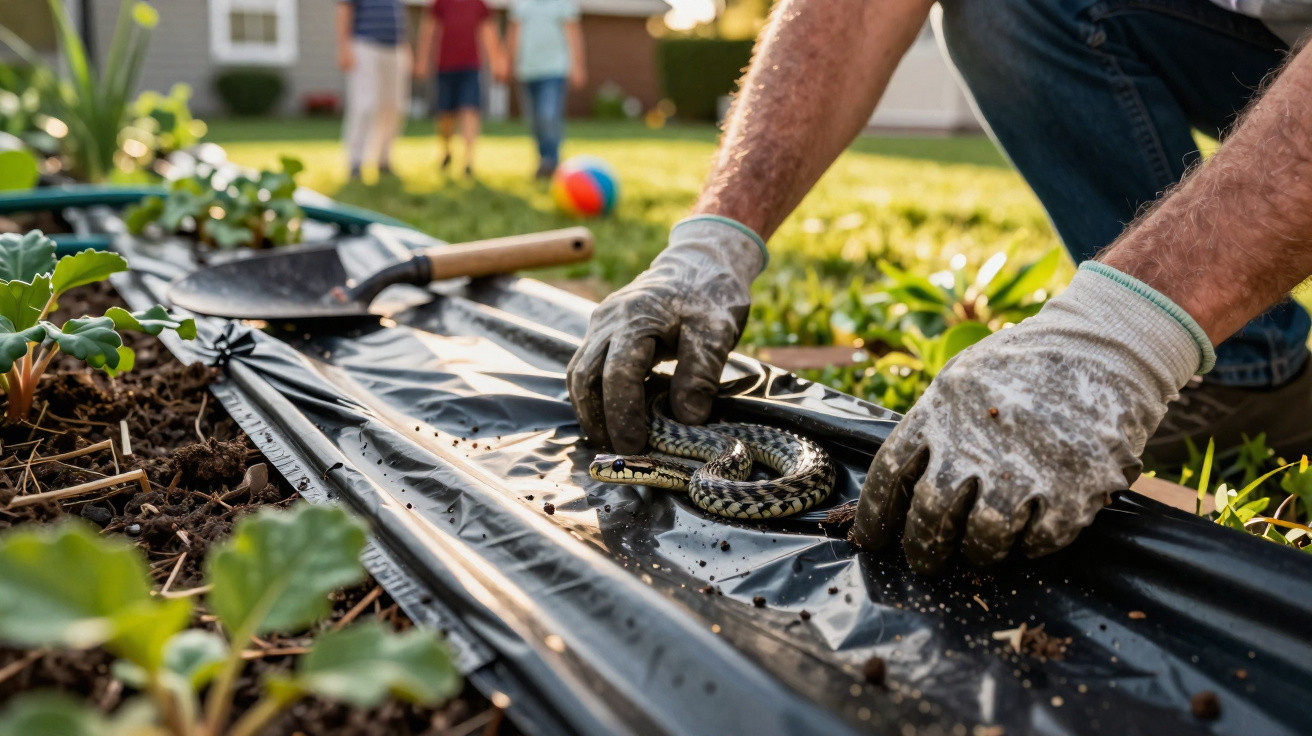
Many keen gardeners are puzzled when the patch they tend so carefully suddenly becomes a meeting point for vipers. It is not because the garden has “gone wild”, but because of one simple design choice that people use almost everywhere around patios, beds and sheds - without ever thinking about snakes.
Why vipers come into our gardens at all
Vipers are native across large parts of Europe and form part of the natural wildlife. In France, the asp viper and the adder are particularly widespread; in Germany, it is mainly the adder and, in certain areas, the asp viper. Their venom can be dangerous to people, but they do not seek out confrontation.
“Vipers avoid people and usually bite only when they feel cornered or surprised.”
They typically emerge from winter dormancy around March and remain active into autumn. To hunt and digest, they need body temperatures of roughly 25 to 30 °C. That is exactly why garden layout and materials matter so much: anything that holds heat while also providing cover can read to a snake like an open invitation.
The hidden “radiator”: black plastic sheeting on the ground
The unobtrusive item that repeatedly crops up in reports of vipers being found is black plastic covering laid on the ground - for example, weed-control membrane or a loose tarpaulin in the vegetable plot or beside the patio.
From a snake’s point of view, this kind of sheeting works like a high-tech heat pad:
- The dark colour absorbs sunlight especially well.
- The plastic retains warmth and releases it slowly into the ground.
- A dry, sheltered gap forms between the soil and the sheet.
- The temperature there often lands exactly in the range vipers need for thermoregulation.
If the sheet is only loosely laid, or the edges are not tucked in, snakes can easily slip underneath from the side. For them it is an ideal spot: warm, protected from wind, undisturbed and close to food - because mice, insects and other small animals often gather under coverings.
Common ways this “secret snake hotel” is created include:
- A winter cover for the pool or sandpit is folded up on the ground in spring and “left there for now”.
- Black weed membrane has sat for years in the vegetable bed, half loose.
- A tarp used for building or garden jobs is shoved into a corner behind the shed.
“If you leave a black tarpaulin on the ground, you can create a five-star hiding place for snakes faster than you think.”
When and where the garden becomes particularly risky
Vipers follow warmth, not people. They make highly targeted use of microhabitats - tiny patches that have different temperatures or moisture levels from their immediate surroundings.
Typical snake hiding places around the house
Besides black sheeting, several other locations can be just as suitable:
- Wood piles placed directly on the soil - dark, dry and full of gaps.
- Pallets lying on the ground - a warmer cavity develops underneath.
- Garden chests or storage boxes tight against the wall - sheltered from wind and rarely disturbed.
- Heaps of stones, roof tiles or rubble - lots of crevices with changing temperature zones.
- Coiled hoses or cables in sunny spots - creating a lukewarm, protected “tunnel”.
The animals are most active:
- on sunny days from late morning, once the ground has warmed,
- in the afternoon when the temperature stays steady,
- on very hot days, more towards evening as it cools slightly.
After thunderstorms or heavy downpours, they often shift into dry, warm corners - for example under tarpaulins, within wood piles or beneath raised decking.
How to use membranes and tarpaulins safely
There is no need to give up coverings entirely out of fear of snakes. What matters is how they are handled. Specialists recommend a kind of “anti-viper check” in spring, before the gardening season properly begins.
Checklist for snake-safe use of sheeting
Remove unnecessary plastic sheeting
Walk your plot methodically and clear away old, damaged or unneeded sheets and tarps - especially anything lying directly on the ground.Fix in-use membranes correctly
If you need a sheet for weed control or to set up a bed, the edges should be buried at least about 10 cm deep. It should be pulled tight, with no folds or gaps.Raise timber and stored materials
Avoid storing logs, boards or panels flat on the soil. Even a 20 cm gap on stones or blocks changes the microclimate and makes the spot less appealing to snakes.Keep a narrow, closely cut strip around the house
A 1 to 2 metre band of short grass or gravel along the wall reduces hiding opportunities and makes it easier to see what is there.Prefer natural coverings
Instead of synthetic weed fabrics, use bark mulch, chipped branches or straw. These hold less heat and do not create such pronounced cavities.
“If you reduce plastic, seal the edges and clear away hiding places, you significantly lower the chance of unpleasant encounters.”
What to do if a viper suddenly appears in front of you
Even with care, you might still come across a viper when lifting a sheet or tidying a wood pile. In that moment, panic helps no one.
How to behave during a snake encounter
- Stop and avoid sudden movements.
- Step back slowly and give the snake space to move away.
- Do not try to catch it or chase it off.
- If it is in a sensitive area (patio, children’s play space), contact your local council, a wildlife conservation group or the fire service, depending on what is available in your area.
Vipers are protected in many places. Killing them is usually illegal and, from a biological standpoint, rarely achieves much: if the habitat remains suitable, other animals will eventually move in. It is far more effective to design the garden so it is less attractive to them.
What to do in the event of a bite
Bites are uncommon, and deaths in Europe are extremely rare. Even so, it is a medical emergency where time matters.
- Call emergency services on 112 and describe the symptoms.
- Remove items such as rings, watches or tight bracelets near the bite.
- Keep the affected limb as still as possible; do not walk or run around.
- Do not apply a pressure bandage unless instructed by medical professionals.
- Do not cut the wound, do not suck out venom, and do not apply fire or ice.
Modern treatment and antivenoms have greatly improved outcomes over recent decades. The key is to reach medical care quickly and to avoid risky “home remedies”.
Why snakes still have a place in nature
Even if the idea of vipers in the garden makes many people uneasy, these animals play an important role in the ecosystem. They help control mouse and rat numbers and therefore indirectly reduce diseases that rodents can spread.
A varied, wildlife-friendly garden with dead wood, stone walls and hedges can still be suitable for reptiles without automatically becoming a snake hotspot. The important point is to keep such areas slightly away from the house and to avoid plastic “heat traps” close to lived-in spaces.
Practical tips for family gardens
- Keep children’s play areas as open as possible, without wood or stone piles right next to them.
- Mow the lawn regularly, at least where people often walk barefoot.
- Do not leave shoes outside permanently; bring them indoors or hang them up.
- Keep an eye on pets: dogs and curious cats can more easily provoke a viper.
If you know the usual hiding places and take a careful look when clearing up in spring, the risk drops noticeably. The biggest factor really is an unassuming item: dark plastic sheeting on the ground. Secured properly - or replaced altogether - it removes the most attractive retreat right beside patios and beds.


Comments
No comments yet. Be the first to comment!
Leave a Comment