
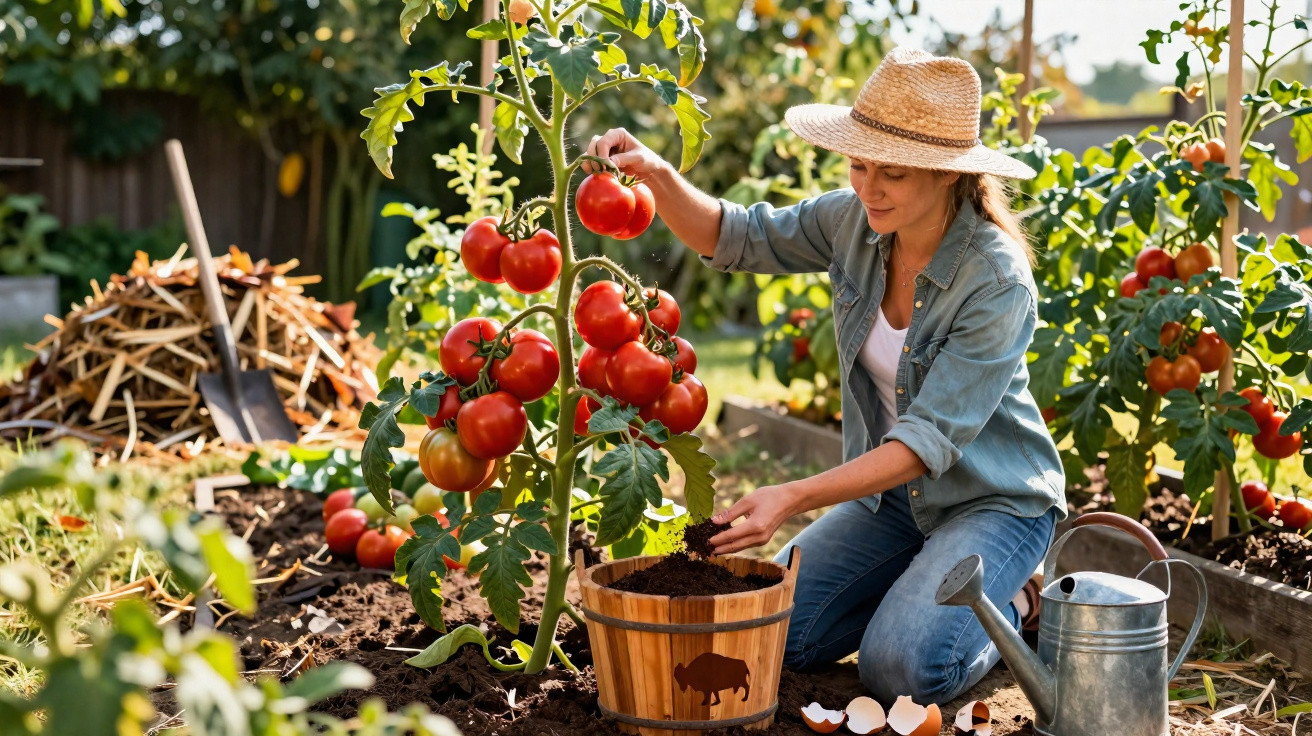
Plenty of hobby gardeners water, mulch and compost - yet still end up with disappointing tomatoes.
A low-profile natural fertiliser can change that dramatically.
Anyone dreaming of heavy, sweet, deep-red tomatoes in summer will know the frustration: lots of effort, little reward. Often the issue isn’t the variety or the weather, but the soil itself. A little-known type of manure from animal husbandry provides exactly the nutrients tomatoes need over the long term - and can make pricey synthetic feeds unnecessary.
Why garden tomatoes hit their limits so quickly
Tomatoes are among the hungriest vegetables you can grow in open ground. They put on growth fast, develop long roots and lots of foliage, and are also expected to carry kilos of fruit. That only works when the soil keeps supplying nutrients consistently.
The three key elements are:
- Nitrogen (N): drives plant growth - leaves, stems and overall vigour.
- Phosphorus (P): encourages root development and supports flowering and fruit set.
- Potassium (K): helps build sturdy, resilient plants and produces tastier, properly ripened fruit.
In many home gardens, the first feed in spring is still fairly decent. But after a few weeks, those reserves are used up. The result: plants stay small, set very little fruit, or drop flowers. This is exactly where a particular organic fertiliser can make a difference.
The underestimated star: bison manure as a natural tomato booster
Long since ordinary in North America but still almost unknown here: bison manure used as an organic, long-lasting fertiliser for vegetable plots. It contains concentrations of nitrogen, phosphorus and potassium that are notably higher than standard cattle manure, while still working gently and sustainably.
“Bison manure supplies tomato plants long-term with NPK, calcium, sulphur and magnesium - in a natural form that releases slowly.”
Beyond the three main nutrients, the manure also provides:
- Calcium: helps prevent blossom end rot, strengthens cell walls and supports firm flesh.
- Sulphur: aids protein formation and improves resilience.
- Magnesium: essential for photosynthesis and helps counter yellowing leaves.
Bison mainly graze tough grasses. That makes their droppings particularly high in fibre. In the fertiliser’s country of origin, these pats become small oases for soil life and insects. Once composted, the manure turns into a humus-rich feed that nourishes soil micro-organisms - which, in turn, keeps tomato roots supplied with nutrients over time.
Never use bison manure fresh: how to compost it safely
Fresh bison manure is too strong for tomatoes. It contains too much readily available nitrogen and ammonia, can scorch roots and often smells unpleasant. On top of that, fresh manure frequently carries germs and weed seeds.
The fix is thorough composting. As the heap heats up significantly in the centre, pathogens and many seeds are killed off, and the manure matures into stable humus.
Step-by-step guide to bison compost
If you can get hold of bison manure - for instance from specialist farms or purchased products - you can handle it much like other farmyard manures. Here’s a straightforward method:
- Choose a site: pick a spot with good drainage, ideally on firm ground so the heap doesn’t sink into mud.
- Build in layers: alternate a layer of manure with a layer of dry, carbon-rich material such as straw, leaves or wood shavings.
- Aerate: turn the heap once a week with a fork so oxygen gets in and the temperature rises evenly.
- Wait for maturity: depending on quantity and weather, leave it for 90 to 120 days until the material is dark, crumbly and almost odourless.
Ideally, the core of the compost reaches around 55 degrees Celsius. In this range, many pathogens and weed seeds die off, without completely wiping out the valuable soil biology.
“Mature bison compost smells earthy, not sharp, barely sticks, and feels more like woodland soil than a cattle shed.”
How to apply bison manure to tomatoes for best results
The best moment to work the fertiliser in is a few weeks before planting the tomatoes. That gives it time to blend properly with the garden soil.
Preparing the bed
- Loosen the top layer of soil to a depth of 20 to 25 centimetres.
- Spread mature bison compost thinly over the surface and work it in loosely.
- Leave it for a few days so soil life and nutrient availability can settle.
When you actually plant, one rule matters: tomato roots should not sit directly on a thick band of fertiliser. Always keep a layer of normal soil between the plant and the compost.
A practical way to plant:
- Dig the planting hole, add a little compost at the bottom, then lightly cover it with soil.
- Set the tomato in place so the roots only touch the covering soil.
- Water in thoroughly with plain water - without adding any extra feed.
Liquid fertiliser from bison manure: a gentle boost for pots and beds
As well as solid compost, tomatoes can benefit from so-called bison manure “teas”. These are usually made from already composted manure steeped in water and sold as a concentrate. You dilute it heavily and use it like a liquid fertiliser.
Everyday use:
- Dilute the concentrate with non-chlorinated water according to the manufacturer’s instructions.
- Apply only to moist soil - not to thirsty, stressed plants.
- Give a first moderate feed when planting out, then top up about every three weeks.
- Keep the watering ring a few centimetres away from the tomato stem to avoid root scorch.
“Even small amounts of the tea are enough to feed tomatoes evenly in beds and in pots - without mineral fertilisers.”
How bison manure improves the soil over the long term
Compared with many mineral feeds, the advantage isn’t only the nutrient form - it’s also what it does to soil structure. Organic matter opens up heavy soils, improves water retention, and provides food for soil organisms.
With regular use of bison compost, you may notice:
- Soil becomes easier to work and is less prone to capping and crusting.
- After rainfall, the ground dries out more slowly and waterlogging is less common.
- Earthworms and other soil creatures become more abundant.
Tomato roots gain directly: they encounter more fine pores, more oxygen, and a denser network of micro-organisms that make nutrients available. That usually translates into sturdier plants with thicker stems and better-developed trusses.
Risks and limits: when to be cautious
Even a natural product like bison manure is still a concentrated fertiliser. Overdoing it can overwhelm plants, especially in pots where compost volume is limited. Yellowing leaves, scorched leaf edges or stalled growth can indicate excess feeding.
Key safety points:
- Use only fully matured manure or certified products.
- If composting yourself, always wear gloves and don’t site the heap right next to the vegetable bed.
- Never apply fresh manure directly to root vegetables or salads that are eaten raw.
If you’re unsure, start with smaller amounts and watch how the plants respond over the following weeks. With container-grown tomatoes in particular, a light drench of liquid feed at wider intervals is often plenty.
Practical tips for hobby gardeners without their own bison farm
In Central Europe, very few people can access fresh bison manure directly. Instead, more and more products are appearing in garden centres and online: dried pellets, granulated composts or liquid extracts. You can dose them in much the same way as other specialised organic feeds.
If you like experimenting, bison manure can be combined with proven approaches:
- Kitchen-and-leaf compost as the baseline feed.
- Bison manure targeted specifically in the tomato area as an extra.
- Mulch layers of straw or grass clippings to retain moisture.
In dry summers especially, this combination pays off: mulch shields the soil, compost improves structure, and bison manure supplies the nutrients tomatoes urgently need during peak growth.
For many hobby gardeners, it’s worth trying on a small patch first. If you feed one or two rows of tomatoes with bison manure and treat the rest as usual, the contrast is often obvious after the first season: stronger plants, sturdier trusses, and a harvest that keeps going longer without constant top-ups.


Comments
No comments yet. Be the first to comment!
Leave a Comment