
The first time it hits you, it doesn’t feel dramatic. You’re crouched down again, tugging yet another dandelion from a cracked ribbon of bare earth, quietly asking yourself when gardening became unpaid work on your knees. The sun is blazing, your lower back is making itself known, and the beds you were so proud of in spring already seem worn out, parched, and older than they ought to be.
Over the fence, your neighbour ambles about with a coffee, not a tool in sight. Their borders look full, settled, almost as though they look after themselves. No exposed soil, no dusty bald spots-just a soft layer of mulch and plants pressing together like long-time companions.
You begin to think you’ve missed something: perhaps the trick isn’t grafting harder.
Perhaps it’s keeping the ground covered so it starts pulling its weight.
Why bare soil always bites back
Step into any garden that demands constant upkeep and one thing tends to stand out: plenty of uncovered ground. Straight after a thorough weed, it can look neat-like a floor that’s just been swept-but the tidiness doesn’t hold.
A few days later, weeds return, moisture disappears, and the surface turns hard, almost cement-like under your fingertips.
Bare soil is an open invitation. Wind drops in fresh seed. Rain batters and redistributes the top layer. You’re not simply growing plants-you’re continually managing disorder.
Now compare that to gardens tended by people who’ve quietly made soil cover a rule. I once met a retired teacher in Kent who said she hadn’t had a bare bed in a decade. Her borders were built in layers: perennials, creeping thyme, self-sown calendula, and a generous mulch of shredded leaves.
In peak season, she reckoned she spends one long afternoon a month on maintenance. The rest of the time she’s deadheading, harvesting, or just pottering about with pruning scissors in her pocket. No constant weeding. No hauling hoses out every evening. The giveaway was along her path edges: hardly any opportunistic volunteers, just a steady, low carpet.
The reason is straightforward. When the soil is protected-by mulch, living groundcovers, or low, spreading plants-weed seeds get less light, water evaporates more slowly, and temperature swings are less severe. Worms and microbes keep working. Roots head downwards rather than clinging to a crusted surface.
Leave the ground uncovered and you get the reverse: it heats up, splits, and loses structure. Shallow-rooted, fast-moving weeds take advantage, and you’re left as the full-time clean-up crew. Good soil is like skin: exposed all the time, it burns and ages fast.
How to let soil cover do the hard work for you
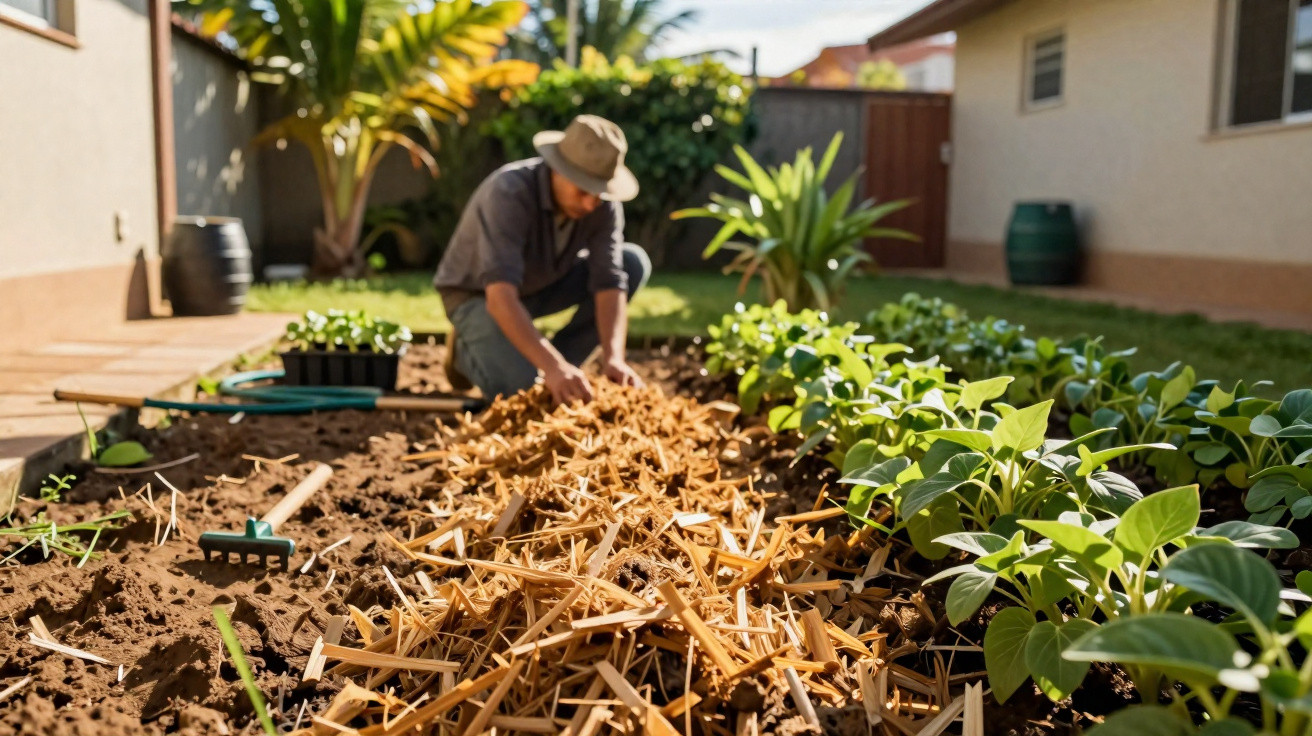
Keep it manageable at first. Choose one bed-or even a narrow strip beside a path-and make a simple decision: from now on, this patch doesn’t sit bare. Weed it once, then spread a 5–8 cm layer of organic mulch. Shredded leaves, composted bark, grass clippings mixed with leaves, or well-rotted compost all fit the bill.
Ease the mulch in around plants rather than burying their crowns. Leave a small breathing space around stems. In veg beds, it helps to wait until seedlings reach about 10–15 cm, then lay mulch between the rows like a blanket.
From that point on, the job changes from “pull weeds” to “keep the blanket topped up”.
Many people try mulch once and then decide it doesn’t work: “Mulch doesn’t work, my weeds came back.” Usually the problem is treating soil cover as a one-and-done task-like painting a wall-rather than an ongoing practice. Mulch breaks down. Groundcovers need a season or two to knit together. There’s a slightly awkward middle stage when you still have to pull the occasional intruder by hand.
That’s where a lot of gardeners lose patience and slip back into bare soil and irritation. Go easy on yourself in that period: you’re altering a system, not just disguising the surface. And honestly, nobody keeps on top of this perfectly every day. What matters is the direction of travel, not flawless consistency.
“Once I stopped seeing mulch as decoration and started seeing it as armor,” a young urban gardener in Leeds told me, “everything changed. The weeds slowed down, the soil stayed crumbly, and suddenly my Sundays belonged to brunch again, not the hoe.”
- Choose organic mulch
Shredded leaves, compost, straw, and wood chips nourish soil life, which then supports your plants. - Build layers, don’t smother
A sensible depth is most effective; heaping mulch against stems encourages rot and pests. - Combine mulch with living cover
Low herbs, clover, or sedums can weave between larger plants and take over much of the weeding. - Refresh once or twice a year
Add more when you can see too much soil showing through. - Keep an eye on drainage and watering
Covered soil holds rain better; tweak watering so beds don’t become waterlogged.
Shifting from “gardening muscles” to “gardening minds”
The biggest change isn’t really a technical one-it’s about mindset. Soil cover encourages you to garden like a woodland rather than a factory floor. In a forest, you don’t find pristine, exposed patches of earth; fallen leaves and twigs are part of the cycle. When gardeners adopt that principle, something tends to fall into place. Plants go in a bit closer. Self-seeders are tolerated. Small, ground-hugging plants are allowed to fill gaps.
Gradually, the garden feels less like a list of chores and more like a steady community that you occasionally guide.
That doesn’t mean you have to abandon structure or style. Some of the most design-led gardens right now pair clipped forms and bold lines with richly mulched beds and dense underplanting. The crispness comes from confident shapes and repetition-not from bare soil.
What changes is the nature of the work. You do less scraping at weeds and more thoughtful editing of plants. You water less and watch more. In time, that translates into fewer hours on your knees and more time actually enjoying what you’ve grown.
Gardens that put soil cover first tend to age more gracefully as well. As mulch decomposes, the soil becomes deeper and darker. Earthworms increase. Droughts feel less punishing, and heatwaves pass with slightly less fuss. It’s a quiet kind of resilience rather than a flashy hack.
And that’s the simple truth: the gardeners who look most relaxed on summer evenings are often the same ones who decided, at some point, never to leave their soil exposed again.
| Key point | Detail | Value for the reader |
|---|---|---|
| Soil cover cuts weeding | Mulch and groundcovers block light from weed seeds and create tougher conditions for invaders | Fewer hours bent over, more time enjoying the garden |
| Covered soil holds moisture | Mulch slows evaporation and smooths temperature swings around plant roots | Less watering, better plant health during heat and drought |
| Organic cover feeds the soil | Decomposing mulches build structure and support beneficial microbes and worms | Richer, easier-to-work soil and stronger plants over the long term |
FAQ:
- How thick should my mulch layer be? Generally 5–8 cm is enough for most beds. Go a bit thicker on heavy, weedy areas, but keep mulch slightly away from trunks and stems.
- What’s the best material to cover soil with? For most home gardens, compost, shredded leaves, straw, or bark chips work well. Mix textures over time to feed the soil and keep things looking natural.
- Will soil cover attract slugs or pests? Dense, soggy mulch can shelter slugs. Use a moderate layer, avoid piling it against plants, and keep some open air around slug-prone crops like lettuces.
- Can I use stones or gravel as soil cover? Mineral mulches like gravel do reduce evaporation and weeds, especially in dry gardens, but they don’t feed the soil. Many gardeners combine gravel with pockets of organic mulch around key plants.
- How long before I see less maintenance? You’ll notice easier weeding within a few weeks, but the real payoff arrives after a season or two, when soil structure, moisture, and plant health all start working in your favour.

Comments
No comments yet. Be the first to comment!
Leave a Comment