
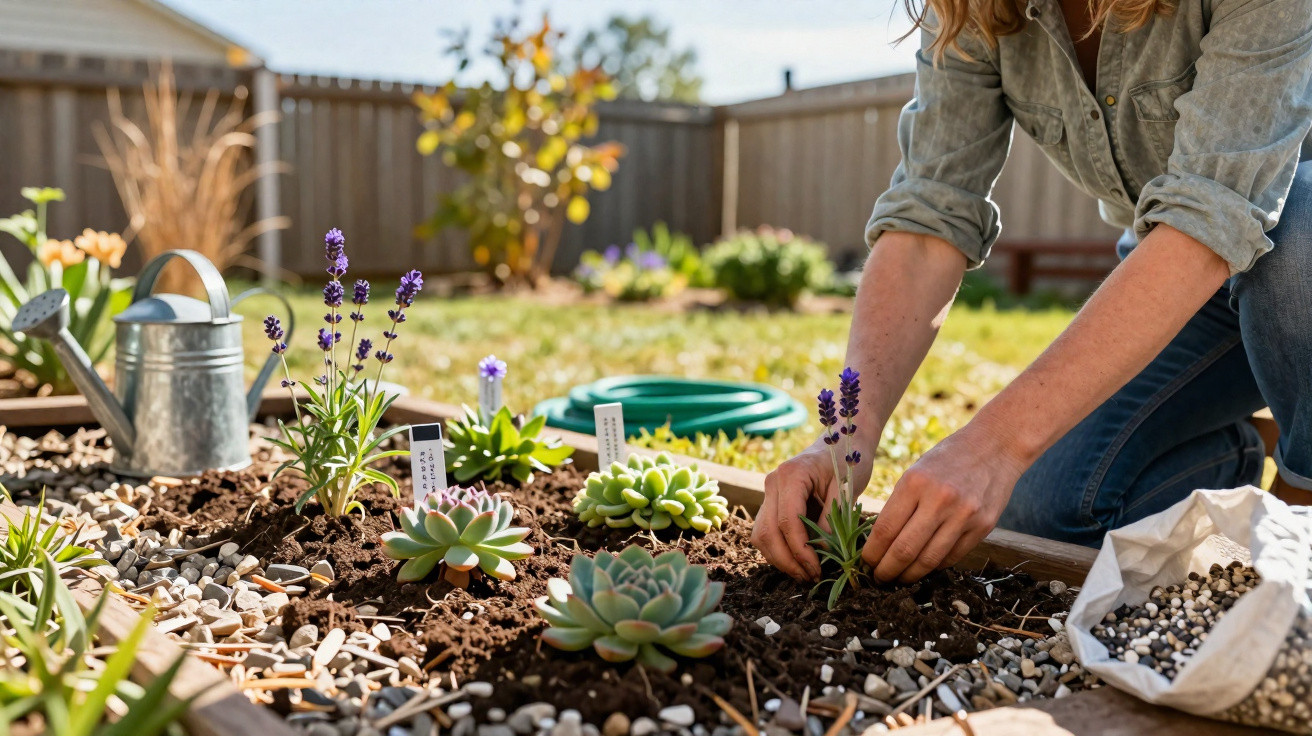
If you choose drought-tolerant perennials and get them into the ground by 31 March, you can usually spend much of the summer watching the border cope on rainfall alone. The real difference isn’t made by pricey irrigation systems, but by timing, choosing the right varieties, and planting in a slightly smarter way.
Why 31 March is the cut-off date for perennials
In spring, far more is happening in the soil than you can see at first glance. By late March, many regions are coming out of winter dormancy: sap begins to rise, and new roots start pushing into soil that is still cool and naturally moist.
"If you plant drought-hardy perennials by 31 March at the latest, you take advantage of the soil’s natural moisture and save hundreds of litres of watering in summer."
This window is so effective because the ground is typically well soaked after winter rain or snow. Perennials planted early into this damp soil can develop fine root hairs before temperatures sit consistently above 25 °C. Those tiny root hairs often determine later on whether a plant shrugs off heat or collapses.
If you wait until May, the plant has to settle into its new spot just as real heat arrives. It ends up fighting on two fronts: building roots while also keeping leaves supplied. That’s when it suddenly needs regular watering-exactly what many people want to avoid due to cost or local water restrictions.
Five “camel perennials” for an almost no-watering summer bed
A summer border that manages without constant irrigation doesn’t depend on exotic rarities, but on tough, reliable classics. These five species are especially well suited.
Perovskia – the Russian perennial for bone-dry spots
Perovskia, often called Russian sage, thrives in full sun and poor soils. Its grey, finely textured foliage loses relatively little moisture, so it can go surprisingly long without watering-even in exposed, windy, south-facing positions.
- Position: Full sun
- Soil: Dry to fresh, very well drained
- Benefit: Tolerates heat, chalky soils, and low-fertility sites
In the border, Perovskia brings airy violet haze in high summer and pairs well with ornamental grasses or globe thistles.
Sedum ‘Autumn Joy’ – water storage in the leaves
Sedum ‘Autumn Joy’ is one of the classic perennials for dry corners. Its thick, fleshy leaves store water like small tanks, helping the plant get through extended dry spells without immediately wilting.
Its late flowering from August to October attracts plenty of insects. If you dislike bare patches in autumn, this stonecrop is a strong choice. Once established, it usually copes through hot summers with little to no extra water.
Gaura lindheimeri – butterflies on stilts
Gaura may look delicate, but it is tougher than it appears. It forms a deep taproot that draws moisture from lower soil layers, making it a useful partner for dry, light soils.
From June well into autumn, countless white-pink flowers hover above the planting on slender stems. It handles heat well as long as the soil stays open and free-draining and water never sits around the roots.
Echinops ritro – blue spheres for lean soils
Globe thistle (Echinops ritro) is a summer showstopper: steel-blue balls held on sturdy stems. It’s happiest where many other plants give up-dry, chalk-rich, relatively poor ground.
After the initial establishment phase, Echinops prefers to be left alone. Too much water or overly rich soil tends to make it floppier rather than stronger. If you have a sunny “problem bank”, this can be a dependable long-term resident.
Lavandula angustifolia – lavender, if the soil is right
English lavender is a perfect fit for a Mediterranean-style dry bed: fragrant, floriferous, and highly attractive to bees. The one non-negotiable is drainage-water must move through the soil quickly.
In heavy, wet clay, roots can rot easily over winter. If your soil is on the clay side, work in coarse sand, gravel or grit, and plant lavender on small mounds rather than in dips.
"All five perennials love sun and a soil where water can soak in briefly, but never stands for long."
Garden trick: plant perennials so they need hardly any water later
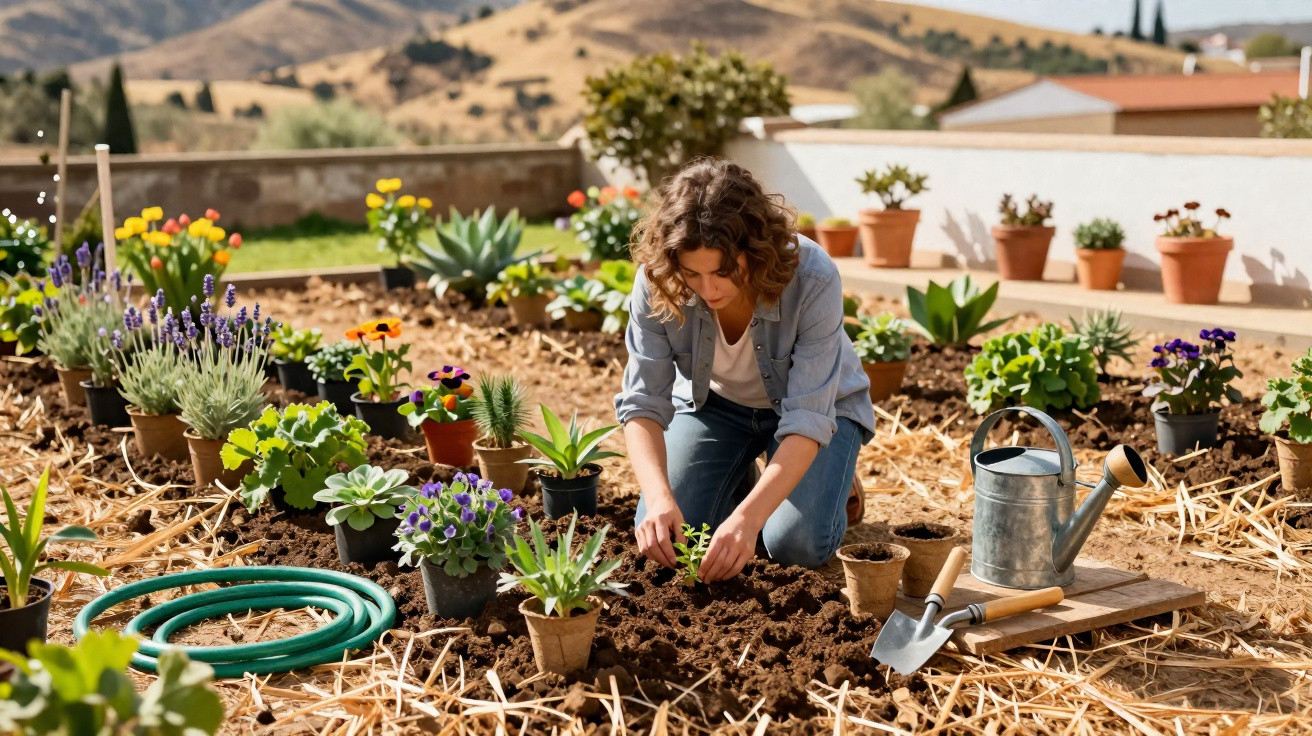
Skipping summer watering starts right in the planting hole. Good preparation takes a little longer up front, but pays off for years.
- Soak the root ball for about 15 minutes before planting, until no more air bubbles rise.
- Dig the hole roughly three times as wide as the pot and loosen the soil at the base.
- In heavy clay, mix in around one fifth coarse sand or gravel.
- Water in thoroughly: apply about 10 litres per plant, even if it’s raining.
- Cover the surface with around 7 cm of mineral mulch (gravel, grit, lava).
This one-off “starter drink” doesn’t contradict the goal of a “summer without watering”. It closes air gaps and ensures the roots make proper contact with the surrounding soil. After that, there’s a much longer period where nature largely takes over the watering.
How much water earlier planting can realistically save
A simple example shows what the calendar can change. If a Gaura is planted in mid-May, it often needs water every 2 days in a hot summer. At a typical 10 litres per watering, that quickly adds up to 200 litres or more in a single season-per plant.
"The same perennial, planted in March, usually gets through the summer heat with far less or even no additional watering."
Planting early shifts the critical establishment period into weeks when soils are still cool and rainfall is more frequent. That not only eases the water bill, but also fits better with increasingly strict regional watering bans.
| Planting date | Summer water requirement (example: Gaura) | Risk during heatwaves |
|---|---|---|
| by 31 March | very low; sometimes no watering needed | roots sit deeper; plants stay steady |
| mid-April | occasional emergency watering in the first year | more vulnerable if early heat arrives |
| from mid-May | regular irrigation, e.g. every 2 days | high failure risk during watering bans |
What if you only get round to planting in April?
If you miss March, you don’t have to postpone everything until autumn. Planting in April can still work-provided you accept a few compromises. In the first season, you’ll need a few rescue waterings, especially after planting and during the first hot spells.
The key is a consistently free-draining soil. Heavy ground can be structurally improved with grit, gravel or coarse sand. Mineral mulch helps keep the soil cooler for longer and reduces evaporation. That gives later-planted perennials a fair chance to cope largely on their own from the second year.
How to compose a dry bed that still looks good
A low-watering border doesn’t have to look like an “endurance test”. With a considered, tiered layout you can create a calm, readable design:
- Back: globe thistle (Echinops) and Perovskia as the taller framework.
- Middle: Gaura and Sedum to fill the space with flowers and structure.
- Front: lavender in loose drifts along the edge.
If you want to knit gaps together, you can add versatile garden “all-rounders” such as hardy cranesbill geraniums. Many varieties handle both sun and partial shade, come through frost without protection, and cover the ground well. In late winter, simply pull away dead material by hand-the rest re-sprouts on its own.
Background: why mineral mulch works so well in dry beds
Many people reach for bark mulch out of habit. For Mediterranean-style perennials, it’s rarely ideal. Organic mulches tend to hold moisture too long near the surface and can encourage rot there-especially with lavender and Perovskia. They also break down and acidify the soil, which chalk-loving plants dislike.
Mineral coverings such as grit, gravel or lava behave differently: rain passes through, the surface warms moderately during the day and releases heat slowly at night. Insects benefit from the warm, dry gaps, and unwanted weeds find it harder to get established.
Practical view: what a low-watering bed feels like day to day
If you switch from a traditional “thirsty border” of hydrangeas and water-hungry summer bedding, the first summer often brings a real moment of surprise. Where the hose used to be out every evening, a simple check becomes enough: are leaves drooping? does the soil beneath the grit still feel slightly moist?
During dry spells, one deep soak every 10 to 14 days can be more effective than daily light sprinkling. It encourages deep-rooting perennials to search lower down, rather than “begging” at the surface.
Risks, mistakes, and how to reduce them
A dry bed isn’t entirely risk-free. Three issues tend to show up most often in real gardens:
- Too much winter wet: Lavender in particular reacts with root rot. Plant higher and include drainage.
- Choosing the wrong plants for shade: These “camel perennials” need light. In partial shade, add more suitable companion species.
- Overfeeding: Drought specialists don’t need heavy fertiliser. A single light addition of compost in the planting year is usually enough.
If you’re unsure, start with a small trial bed. A square metre planted with the five perennials above will show within a year whether your soil and site are a good match. If one species fails, you can adjust specifically without having to overhaul the whole garden.
Over the long term, another advantage becomes clear: combining early planting, suitable species and mineral mulch reduces not only water use but also ongoing maintenance. A cut-back in late winter, a spring check, and the occasional top-up of grit are often all a well-built dry bed needs to stay stable-even in very hot summers.
Comments
No comments yet. Be the first to comment!
Leave a Comment