
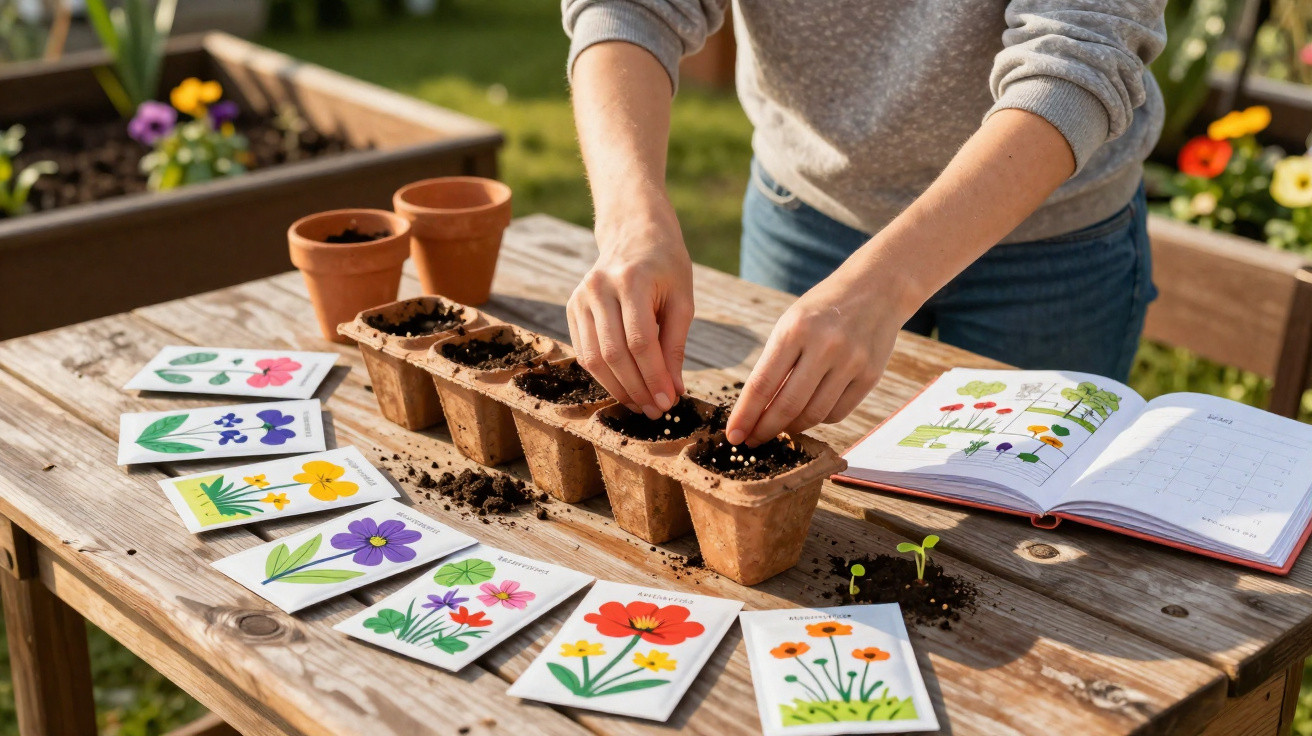
Most keen gardeners reach the same point every spring and ask the same thing: when is the ideal time to map out the summer garden? The answer is: right now. In the handover from winter into spring, you set the direction for the months ahead-whether your borders will end up packed with colour or look disappointingly sparse. By sowing seven straightforward flower types as early as March, you give the garden a head start and keep it appealing well into autumn.
Why March makes the difference to your summer garden
In March the light returns, days stretch out, and it’s hard not to want to get stuck in outdoors. At the same time, conditions can still swing about. In many parts of the UK, overnight frosts can linger into April and, in some areas, even May-which is exactly what makes many gardeners hesitate.
That’s also where March comes into its own. If you begin early and take a sensible approach, you can get far more from your space. Annual summer flowers in particular respond brilliantly to an early start in sheltered conditions.
"If you begin with the right flowers in March, you prevent bare patches and close so‑called ‘flowering gaps’ in summer beds."
For that reason, experienced gardeners often start sowing indoors: on a bright windowsill, in an unheated greenhouse, or in a simple cold frame. This gives young plants several extra weeks, so they can go out strong once the last frosts have passed.
Choosing the right seed: how to avoid disappointment in the borders
Many beginners go through the same scenario: you sow with high hopes, you water faithfully-and later you’re left with just a few weak little seedlings in the tray. Often it isn’t a lack of skill at all; it comes down to seed quality or simply choosing the wrong type for the job.
That’s why more and more home gardeners deliberately opt for open‑pollinated (seed‑saving) varieties. They tend to produce sturdier plants and, crucially, you can collect your own seed for the following years. Once you’ve found a variety that performs well, it’s easy to build up a small personal collection over time.
Seed swaps, community “seed shelves” in libraries, and neighbourhood initiatives have become especially popular. Gardeners share surplus seed and pick up new varieties in return. In this way, reliable flowers that already do well locally can spread quickly.
"Many garden enthusiasts report that plants grown from locally collected seed are noticeably more vigorous the following year and better adapted to the site."
Seven easy flowers you should sow in March
You don’t need dozens of tricky plants for a genuinely colourful summer-often a handful of uncomplicated species is enough. The seven flowers below can be sown in March, grow quickly, and deliver dependable flowering even if you’re still learning.
- Zinnias – bright, full, and ideal for cutting
- Sweet peas – fragrant climbers for supports
- Nasturtiums – edible, tough, and wonderfully productive
- Wallflower – strong scent with an old‑fashioned feel
- Tickseed (Coreopsis) – months of bloom in yellow and orange shades
- Love‑in‑a‑mist (Nigella) – delicate, romantic flowers
- Poppies – a wild meadow look and often self‑seed for future years
Zinnias: bold colour for beds and vases
Zinnias are among the most dependable summer flowers you can grow. From tiny seeds you’ll get sturdy plants carrying large, richly coloured blooms-ranging from white through pink and red to vivid orange. They’re excellent for filling borders so they look denser, and they’re made for cutting into bright summer bunches.
Sowing: start indoors in March in small pots; cover lightly with compost and keep them somewhere warm and bright. Plant out after the final frosts. Zinnias do best in a sunny spot with nutrient‑rich soil.
Sweet peas: nostalgic climbers with a romantic scent
Sweet peas can turn fences, trellis and balcony railings into living walls of flowers. The perfume is intense and instantly brings cottage gardens to mind. The more you pick, the more they keep producing.
Sowing: from March, raise them in pots-ideally in a cool, bright position. Soak the seeds in water beforehand to speed up germination. Plant out once there’s no risk of frost and you have a support in place.
Nasturtiums: an edible flower for low‑effort gardeners
Nasturtiums are forgiving and often recommended when you want things to go green and colourful with minimal fuss. Their flowers glow in yellow, orange and red, and they frequently end up in salads. The leaves are edible too, with a mildly peppery taste.
Sowing: start in March under cover, or sow directly outdoors from around April. The plants quickly cover larger areas, and they also suit pots and balconies.
Wallflower: a fragrance favourite for cooler evenings
Wallflower, sometimes unfairly dismissed as a bit old‑fashioned, releases a powerful scent-especially later in the day. In mixed borders it adds upright structure and pairs particularly well with tulips and other spring bulbs that finish flowering as the season moves on.
Sowing: raise under protection in March, then plant into a sunny, relatively dry position. Wallflower copes with cool conditions better than many other summer flowers.
Tickseed (Coreopsis): long flowering with little fuss
Coreopsis-often sold as tickseed-keeps pushing out fresh yellow or orange blooms for weeks and even months. It doesn’t demand much attention and can manage well even in sandy soils.
Sowing: in March, use a seed tray or small pots; press the seed in lightly, as light helps germination. Prick out later and move into the bed.
Love‑in‑a‑mist: delicate, playful, and tougher than it looks
Nigella (love‑in‑a‑mist) looks almost fragile with its fine foliage and airy flowers, yet it’s more resilient than you might expect. After flowering it forms attractive seed pods that work well in dried arrangements.
Sowing: in mild areas, sow straight into the border; otherwise, start in trays under cover in March. Plant out with as little root disturbance as possible, as it doesn’t take kindly to being moved.
Poppies: for anyone who loves a meadow look
Poppy seeds are tiny, but the impact in a garden is anything but. Their bright flowers sit beautifully in more natural, wildlife‑friendly planting. Many types will self‑seed if you leave a few seed heads to ripen.
Sowing: you can sow very early, but March sowing under cover is a safer option. Scatter seed on the surface and do not cover with compost. Plant out later in small groups to create that characteristic meadow effect.
Indoors or straight into the bed? What to do in March
The best approach depends largely on where you live. In cooler areas where late frosts are a real possibility, starting off indoors or in a greenhouse is worth it. While it’s still freezing outside, seedlings can build strength under protection. In milder locations, several of these flowers can be sown relatively early straight into borders or large containers.
| Flower | Start indoors | Direct sowing possible |
|---|---|---|
| Zinnias | strongly recommended | only in warmer areas |
| Sweet peas | ideal in March | later in spring |
| Nasturtiums | possible | good from April/May |
| Wallflower | recommended | depending on climate |
| Coreopsis | very good | in mild areas |
| Nigella | possible | often directly in the bed |
| Poppies | optional | classic direct sowing |
How to avoid flowering gaps and plan beds smartly
Plenty of gardens look spectacular in June, then visibly tail off in high summer. The reason is often a planting scheme that relies on too narrow a range of plants. The summer flowers listed here help bridge that dip because they keep forming fresh buds over a long period.
A sensible plan mixes different heights: lower growers such as nasturtiums or coreopsis at the front, with zinnias and wallflower behind, and taller sweet peas at the back with a support. Add perennials and spring bulbs as well, and you can keep the garden interesting from early spring right through into autumn.
Practical tips: making sowing and care work day to day
A lot of problems come from impatience or over‑care. Seeds rot easily if compost is kept constantly wet. A better rule is to keep it evenly moist-never waterlogged. Put seed trays somewhere bright but not in full blazing sun, otherwise they dry out too quickly or overheat.
Once seedlings are up, it can help to pinch back overly long shoots on zinnias or sweet peas early on. This encourages branching and leads to more flowers later. When it’s time to move young plants outside, harden them off over several days: outside during the day in a sheltered spot, back in at night-after that, they cope with sun and wind much more confidently.
If you have children, sowing can become a simple project: larger seeds such as nasturtiums and sweet peas are easy to hold and count. It’s a straightforward way to see how a single seed can grow into a full summer flower.
Many of these annuals also attract bees, bumblebees and butterflies. Zinnias, poppies and coreopsis in particular are often busy with visitors. So sowing in March doesn’t just benefit you-it supports insect life too, and a few months later you’ll be sitting in a garden that looks colourful and sounds alive.


Comments
No comments yet. Be the first to comment!
Leave a Comment