
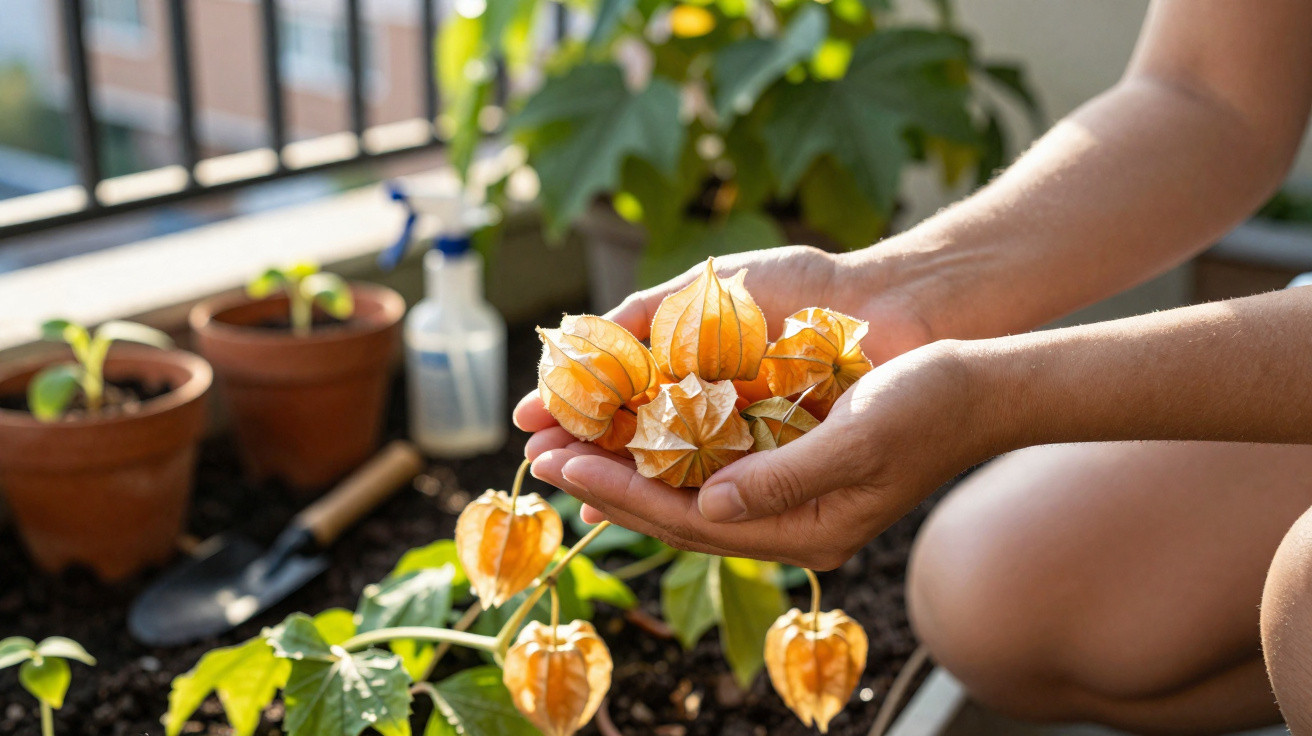
The fruit that looks like a little lantern is the physalis: a small berry that develops enclosed within a papery, capsule-like husk. The unusual look is not limited to the fruit itself. The plant also has the form of a compact shrub and can be eye-catching once it starts producing its distinctive orange fruits.
Why does this fruit look like a little lantern?
Its distinctive shape comes from the flower’s calyx, which keeps growing even after the fruit has formed. This structure wraps around the physalis like a protective capsule and often turns a straw-like colour as it ripens, creating the lantern-like appearance.
The fruit itself is a small berry, typically orange or yellowish. In the species Physalis peruviana, it is around 1.5 centimetres in diameter. The plant is grouped among small fruits and has traits that can make it appealing to cultivate.
What stands out about the plant besides the fruit?
Physalis belongs to the Solanaceae family-the same family that includes crops such as tomatoes and peppers. It grows with a shrubby habit and can form a canopy that, as it develops, benefits from suitable support and training.
Another notable point is that the calyx’s appearance is part of the fruit’s visual identity. As well as protecting the berry, this husk can remain around it and may also be used in decorative arrangements.
How do you grow a physalis plant?
Cultivation usually starts with propagation from seed, followed by raising seedlings and then transplanting them. Key management practices include soil care, fertilisation, pruning and staking.
As the plant grows, it needs attention that matches the chosen growing site. Training the branches can help keep the canopy organised, while an adequate supply of water and nutrients should be maintained throughout the growth phase. Management, however, must take into account the variety and the conditions of the region.
Who can grow this fruit, and in what situations?
Physalis may suit anyone who wants to try growing an unusual small fruit, including in small-scale projects. In Brazil, the species is still less familiar than many other fruit plants, although interest in its cultivation has been increasing.
It is also important not to treat all species within the genus Physalis as the same. Physalis peruviana is known for its fruit enclosed by the characteristic calyx, while other species-such as Physalis angulata, also known as camapu-have their own specific traits. For that reason, correctly identifying the plant matters before deciding on the most appropriate management approach.


Comments
No comments yet. Be the first to comment!
Leave a Comment