
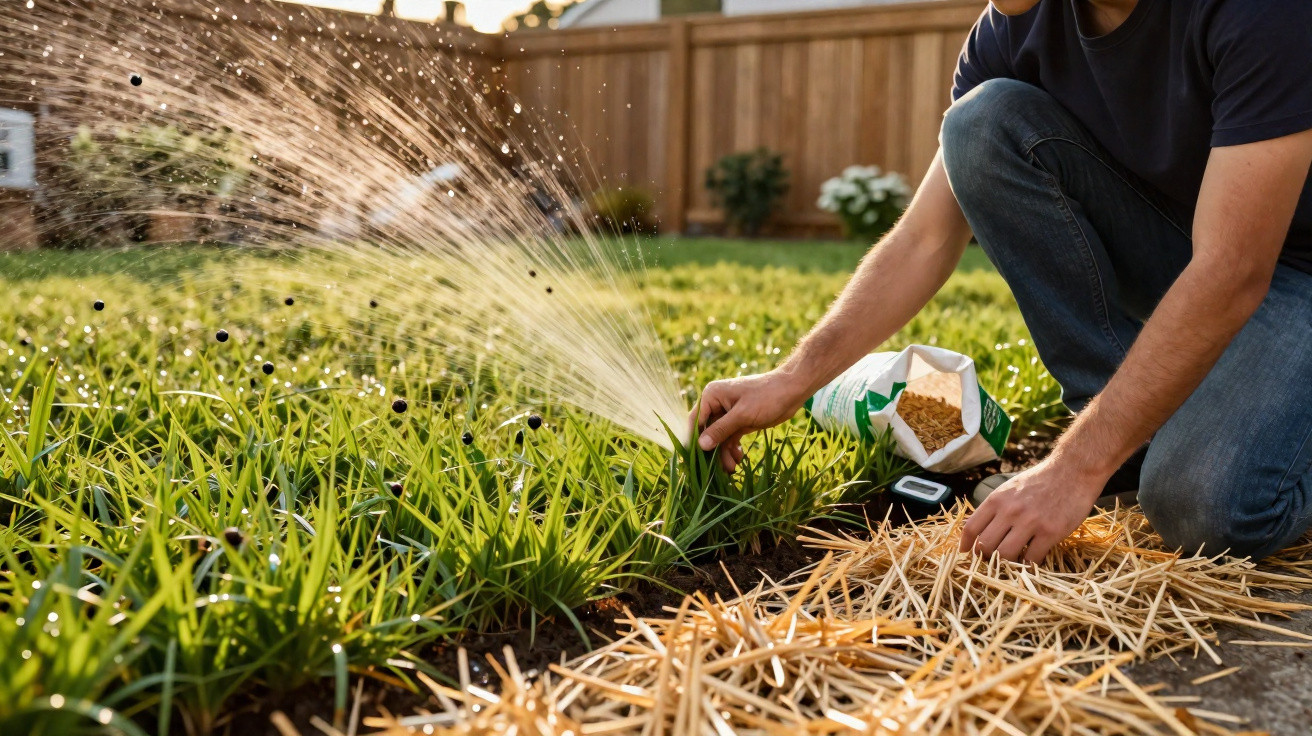
The dull, yellowed look that appears in a back garden after several intense weeks without rain often worries homeowners straight away. Still, once you understand how grass naturally responds, you can take effective recovery steps and restore the lawn’s colour with sensible, balanced interventions.
How can you tell whether a dry lawn is merely dormant or actually dead?
When rainfall is scarce for a long time and temperatures stay high, grass can switch into a natural state of dormancy to protect its vital reserves. The top growth dries out and loses its green tone, but the deeper roots remain fully alive in the protected soil.
To check what’s really happening in the affected patches, try a simple test: gently tug a small clump of dry leaves. If it holds firm, it should sprout again once moisture returns. If it lifts out easily, those plants are more likely to need replanting later.
What simple action helps grass recover in summer?
Small daily adjustments can reduce heat stress on the leaves and prevent severe soil dehydration during hot weather… Read more
What is the correct way to water dehydrated grass?
Lightly sprinkling the garden every day encourages short, weak roots. To bring the plant back, the key is a generous but less frequent irrigation approach, so water can reach deeper layers of the substrate.
The best time to run sprinklers is early in the morning, when evaporation losses are lower. Watering at night leaves the surface too wet for too many hours, which can encourage unwanted fungi in the ground.
Below, there is a video from the STIHL Brasil YouTube channel that explores the points discussed in this topic in more detail:
Why does mowing height affect garden recovery?
Cutting grass too short during dry spells strips away the protective layer that shades the soil. Keeping the height a little higher reduces direct heating of the surface and helps hold on to the hydration needed for cell regeneration.
When you resume mowing after the rains return, avoid removing more than one third of the total leaf length. This reduces stress on the plant’s internal structures and supports fresh, even growth across the whole garden.
Mowing Height Care
Guidelines for the ideal cut - follow these points when mowing: 1. Keep the mower blades sharp to prevent ragged, uneven cuts. 2. Set the cutting height to between 6 and 8 cm during dry periods. 3. Mow only when the soil is dry, so you do not compact the ground.
What practical steps help restore thin or bare patches?
If some parts of the lawn still do not respond after moisture returns, you will need to prepare the ground for a fresh seeding. Light scarification clears away built-up dry debris, helping nutrients and oxygen penetrate.
Applying a thin layer of organic compost enriches the soil’s biological profile and creates better conditions for rooting. This gentle top-dressing also shields the new seeds from birds and keeps in the freshness required for quick germination.
Recommended actions to recover areas with little or no cover:
- Clear debris and dead thatch with a metal rake.
- Spread seeds suited to the amount of sunlight the spot receives.
- Keep the soil lightly moist until the new shoots are established.
How can you prevent fresh damage in the next hot season?
Building a lawn that copes well with drought means putting preventive practices in place in advance, such as aeration and balanced fertilising. Periodically adding organic matter improves the soil’s water-holding capacity and strengthens the roots’ tolerance.
Choosing botanical varieties suited to the local climate also helps prevent heavy leaf loss during hot periods. Combining resilient species supports a greener, longer-lasting look, withstanding severe dry spells with notable natural vigour.




Comments
No comments yet. Be the first to comment!
Leave a Comment