
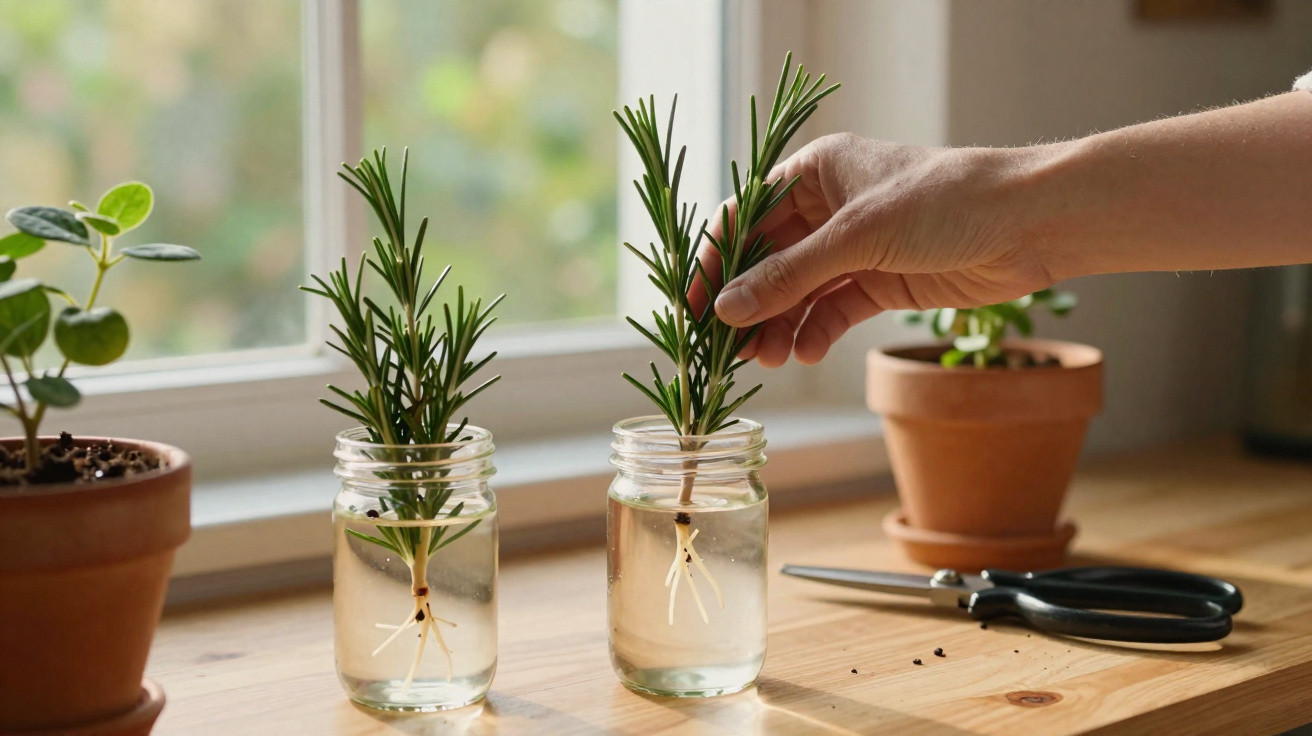
Rosemary can be multiplied by taking cuttings-a method that uses a healthy piece of the plant to produce a new plantlet. The Royal Horticultural Society lists rosemary among the herbs that can be propagated this way, and advises preparing cuttings of around 10–15 cm, removing the leaves from the lower section before planting.
Why is the node important for root formation?
A node is the point on the stem where leaves and buds emerge. When you prepare a cutting, making the cut just below a node positions that area close to the growing medium, which can help encourage roots to develop.
This positioning also makes it clearer where you should strip off foliage. The RHS recommends removing leaves from the lower half of the cutting before inserting it into the compost, while keeping leaves at the top so the cutting can continue photosynthesising as it establishes.
Which rosemary stem should you choose for cuttings?
Choose a vigorous, healthy stem with no obvious signs of disease, pests, or damage. For herb propagation, the RHS advises selecting shoots that suit the method and using plant material that is in strong growing condition.
For rosemary in particular, semi-ripe cuttings can be taken during summer. A stem around 10–15 cm long gives you enough length to prepare the base properly while still leaving an upper section with leaves.
How do you make a rosemary plant from cuttings?
Cut the selected stem just below a node, then remove the leaves from the lower half. Next, place the leafless section into a suitable rooting compost, firming it in so it stands securely and making sure no leaves are buried.
The cutting needs sufficient moisture to avoid drying out, but too much water can increase the risk of rot. While it is rooting, keep the pot in a sheltered spot and monitor the compost so it stays moist without becoming waterlogged.
Who can try this method, and when?
Taking cuttings is a practical option for anyone who already has a healthy rosemary plant and wants more plants without relying on seed. Summer can be a suitable time for working with semi-ripe cuttings, depending on your growing conditions and local climate.
Rooting will not necessarily happen at the same speed for every cutting. Temperature, humidity, light levels, and the quality of the stem all affect the process. For that reason, when making a rosemary plant from cuttings, the key is to start with healthy material and keep conditions steady until the new plant produces roots.

Comments
No comments yet. Be the first to comment!
Leave a Comment