
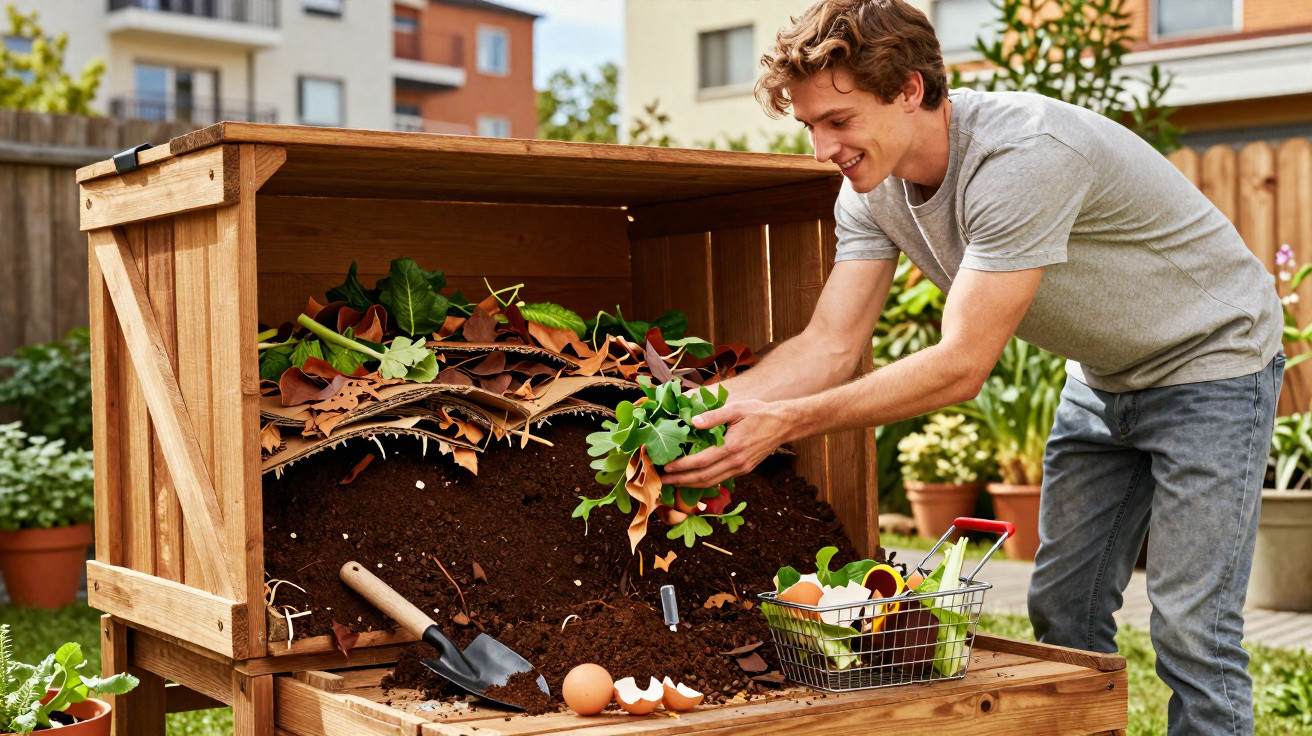
Home composting turns fruit and vegetable peelings, leaves, and other organic matter into compost you can use in the garden. A helpful rule of thumb is to combine “green” materials, which are rich in nitrogen, with “brown” materials, which are rich in carbon, aiming for roughly 2 to 3 parts dry material to 1 part green material and keeping the mix damp but not waterlogged.
Why mix green and brown materials?
Green waste, such as fruit and vegetable scraps, mainly supplies nitrogen, while dry leaves, straw, small twigs, and other brown materials provide carbon. The micro-organisms that drive decomposition need these nutrients to grow and break the waste down.
Using 2 to 3 parts brown materials to 1 part green is a practical guideline for home composting. The ideal balance can shift depending on what you add, but getting it roughly right matters: too much dry material can slow the process, while an excess of wet, nitrogen-rich material can encourage unpleasant smells.
Which moisture detail affects decomposition?
A compost bin needs water so micro-organisms can do their work, but too much moisture fills the air spaces that should allow oxygen in. That is why the contents should be moist without staying soaked. A simple check is to aim for a texture like a wrung-out sponge.
If the mix is too dry, add small amounts of water. If it is overly wet, mix in dry leaves, straw, or another brown material to absorb some of the moisture and restore the structure of the pile.
How to set up a compost bin using household waste
Pick a container or area with good ventilation and, where possible, some protection from direct rain. Start by alternating or mixing fruit and vegetable scraps with dry leaves, straw, and small twigs. Chopping larger pieces helps by increasing the surface area, which can make decomposition easier.
As the compost breaks down, keep an eye on the smell, moisture level, and how the mixture looks. In systems that need turning, stirring the material helps refresh oxygen and spread moisture more evenly. Poor aeration can slow decomposition and make bad odours more likely.
Who can start composting at home?
Composting can work in homes with a garden as well as in smaller spaces, using suitable systems such as home compost bins and wormeries. The size of the set-up should match both the amount of waste you generate and the space you have available.
When you are starting out, it helps to prioritise suitable plant-based materials and avoid adding waste that may attract pests or pose risks in domestic systems, such as meat, fish, dairy products, and fats. Once the original materials are no longer recognisable and the compost is dark and soil-like, it can be used in the garden according to the system you are using.
Comments
No comments yet. Be the first to comment!
Leave a Comment