
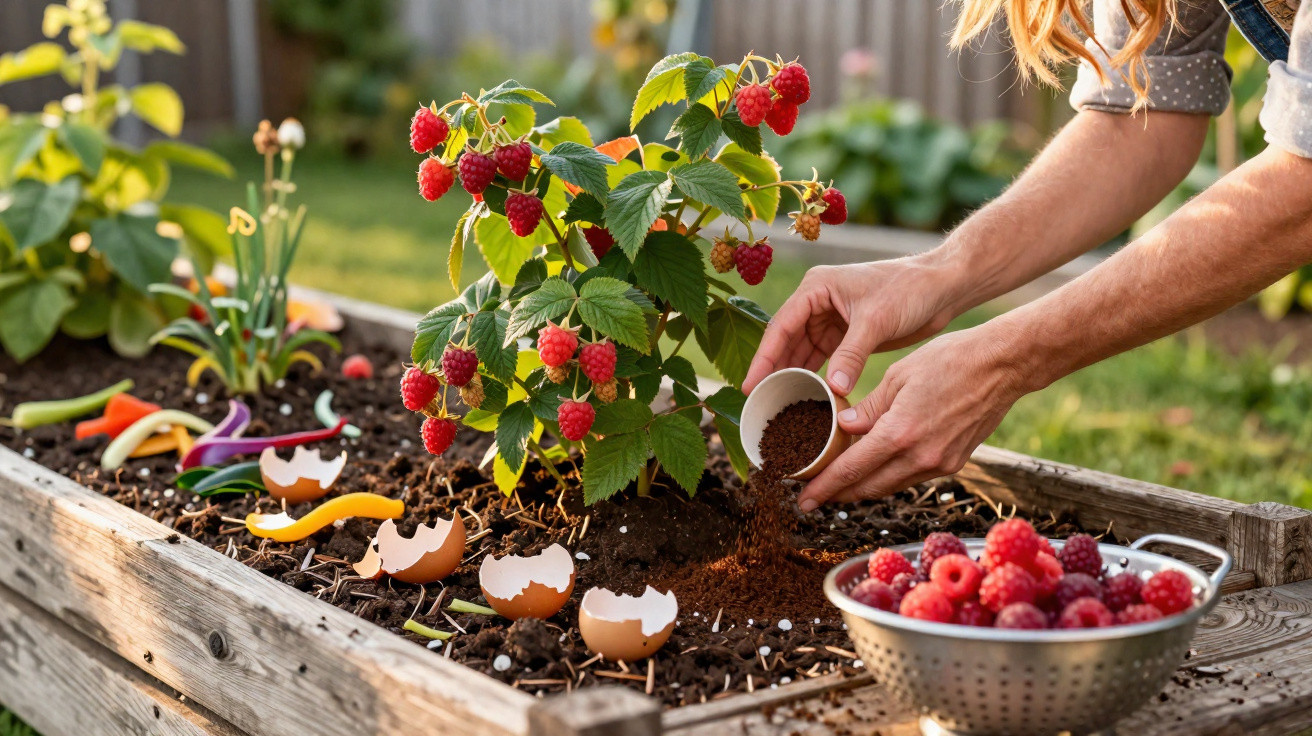
Many home gardeners despair when raspberry bushes are lush and green yet produce hardly any fruit - but a simple trick using an everyday cup can change that.
Anyone dreaming of bowl after bowl of sweet raspberries in summer often ends up facing the reality of just a few measly berries. The bushes look healthy and grow strongly, yet the harvest stays disappointing. For some time now, gardening magazines have highlighted a surprisingly straightforward, practical method: with a leftover from breakfast and a standard kitchen cup, you can noticeably boost fruit production.
Why raspberries often produce leaves instead of berries
Raspberry bushes have a reputation for being tough - and that’s exactly what misleads many people. They reliably sprout, throw up long canes and build dense foliage, so they look full of life. But if you judge only by the leaves, you may not realise the site conditions or nutrient balance have been off for ages.
In many gardens, it looks like this:
- strong, tall canes
- lots of leaf mass, deep green
- hardly any flower formation
- small, dry, or misshapen berries
The root of the problem is usually the soil. Over the years it becomes depleted, compacts, or drifts away from the ideal range. Raspberries prefer soil that is loose, evenly slightly moist, and on the slightly acidic side. When that mix is missing, the plants may keep growing - but they will “economise” on the crop.
"A raspberry bush can look great while starving in the ground - you notice it first in the size of the harvest, not in the leaves."
If you use the same beds year after year, keep harvesting, and only rarely work in organic matter, you gradually strip nutrients from the soil. Flower and fruit formation draw on different reserves than plain leafy growth. The result: canes race upwards, while fruit remains scarce.
The surprising helper: a cup of coffee grounds
This is where the much-mentioned kitchen cup comes in. What’s inside: dried coffee grounds. Instead of going straight in the bin, this everyday leftover can work in the garden as a gentle, organic fertiliser. It’s particularly well suited to plants that like a slightly acidic environment - and raspberries are one of them.
Dried coffee grounds contain, among other things:
- nitrogen - supports vigorous growth and leaf development
- phosphorus - important for flowering and fruit set
- potassium - strengthens tissue and improves resilience
- additional trace elements - encourage soil life
Unlike many mineral fertilisers, coffee grounds act slowly and mildly. Microorganisms and earthworms release the nutrients into the soil bit by bit. That helps build a steadier nutrient supply rather than causing short-term “fertiliser shocks”.
"That breakfast leftover in a cup turns a pure leaf producer back into a raspberry bush that loves to fruit."
On top of that, the slightly acidic character of coffee grounds nudges the pH around the roots closer to what raspberries prefer. The material can also improve soil structure a little, especially in heavy soils that tend to compact.
How to apply the cup of coffee grounds correctly
For the trick to help - and not create new issues - it pays to do it properly. The most common mistake is using damp, clumpy grounds that go mouldy and form a dense layer.
Preparing coffee grounds: always dry them first
Fresh coffee grounds shouldn’t go straight onto the bed. They still hold a lot of moisture and quickly turn slimy. A better approach:
- After brewing, spread the grounds out in a shallow dish.
- Let them dry completely in the air, stirring occasionally.
- Use only when you can no longer feel any damp clumps.
If you drink a lot of coffee, you can store the dried grounds in a bucket and use them gradually.
The right amount for a bush and for a pot
As a rough rule of thumb, one standard cup of dried coffee grounds is enough for one to two mature raspberry bushes in the ground. Scatter the grains in a loose ring on the soil - roughly where the outer shoot tips are - rather than right up against the stems.
Important:
- apply only a thin layer so air can still reach the soil
- don’t mound it directly against the shoots
- then lightly mix it into the surface with soil or mulch
For raspberries in containers, cut the amount right down: in many cases, one to two tablespoons per pot is sufficient, depending on size. A full cup would be too much for the limited volume of compost.
The best timing through the year
Spring and early summer matter most for fruiting. In this period, the plant determines how many flowers it will produce and how well it will feed the developing fruit. If you work in a cup of dried coffee grounds once or twice a month during this time, you create strong conditions for a better harvest.
"Regular, small doses work better than a single large portion - the soil should be fed, not ‘stuffed’."
Alongside that, balanced care remains essential: water enough without leaving the roots waterlogged, and ideally work in some well-rotted compost too. Compost provides a wider range of nutrients, while coffee grounds top things up more specifically and gently shift the soil reaction.
Other levers for a generous raspberry harvest
A cup of coffee grounds can make a real difference, but it doesn’t replace the basics. To get the most from your bushes, keep an eye on a few other factors:
- Pruning: remove spent canes close to the ground after harvesting; keep young, strong new shoots.
- Position: sunny to partially shaded, sheltered from wind, not in deep shade.
- Watering: keep moisture even during dry spells; avoid constant wetness.
- Mulch layer: for example leaves, grass clippings, or straw to stop the soil drying out.
- Airflow: thin overcrowded canes so leaves and fruit dry faster.
If you’ve relied only on shop-bought berry fertiliser so far, you can often reduce the amount once coffee grounds and compost are added. Many gardeners report that plants grow more steadily and seem less prone to leaf problems.
What to watch out for when using coffee grounds in the garden
Helpful as this breakfast leftover can be, it isn’t limitless. In very large amounts, coffee grounds can compact the top layer of soil if they aren’t worked in properly or mixed with other materials. A light sprinkling around the bushes is more than enough.
Some gardeners also notice that certain pets dislike the smell. Cats, for example, often avoid beds treated with coffee grounds - depending on your viewpoint, that’s a benefit or a drawback. For earthworms and many soil organisms, however, carefully measured, dried coffee grounds can provide an extra food source.
If you don’t drink coffee, ask friends, neighbours, or the office - there’s often plenty of grounds going spare that would otherwise be wasted. The key points still apply: always dry them first, and use moderate quantities.
Practical combinations: coffee grounds, kitchen scraps, and berry success
Besides coffee grounds, a few other kitchen leftovers can be useful in the berry garden when used sparingly: finely crushed eggshells add a little lime and trace elements, while banana skins contribute extra potassium. For raspberries, though, don’t overdo lime-rich scraps, as they prefer slightly acidic soil.
A practical routine is to spread a thin layer of well-rotted compost in spring, add a light scattering of dried coffee grounds on top, and then gently work everything into the top layer of soil. This combines a broad nutrient base with a targeted boost from that breakfast cup.
If you keep up this routine for a few months and also give the bushes a thoughtful prune, you’ll often see a much fuller bowl of raspberries as early as the next season. The plants do need time to respond to the new conditions, but in many gardens the result is clearly visible: less frustration over bare canes, and more anticipation of pudding, jam, and snacking straight from the bush.
Comments
No comments yet. Be the first to comment!
Leave a Comment