
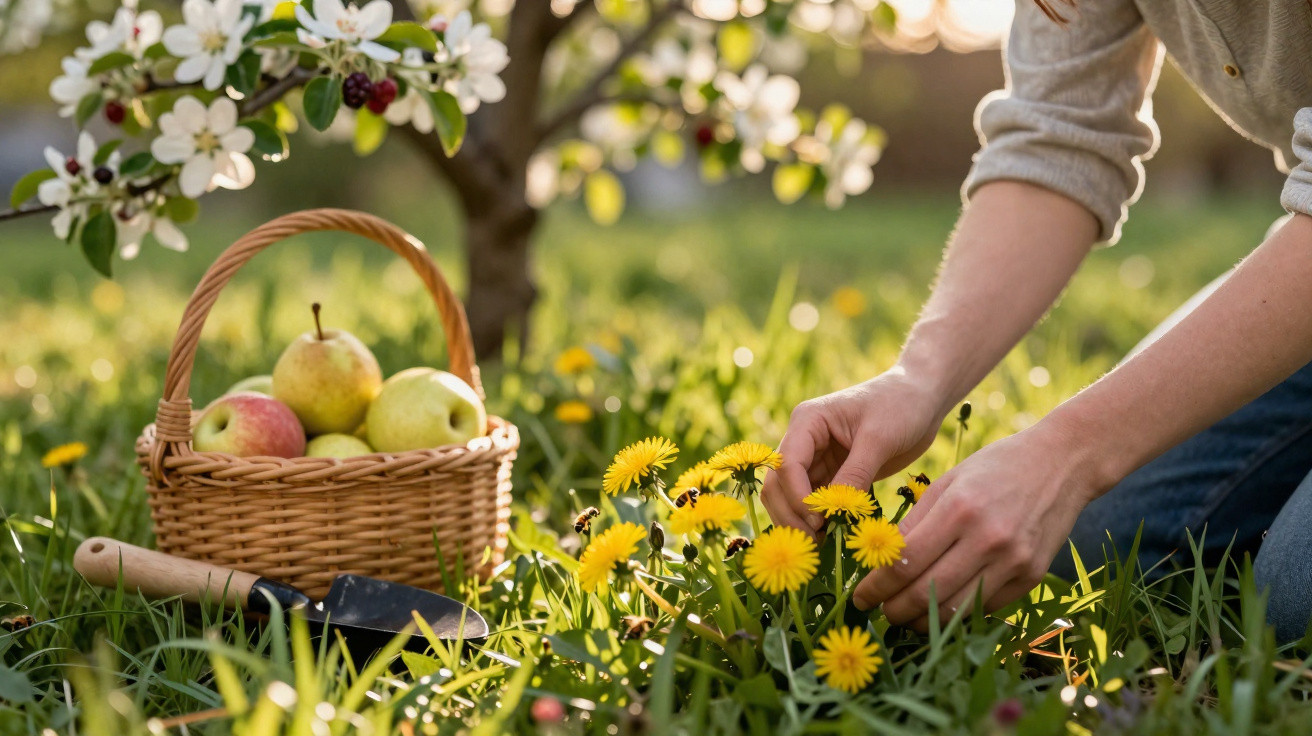
A neighbour stops a gardener mid-weeding - and they’re right: those modest yellow flowers in the lawn often help decide how many cherries, apples and pears you end up with.
Anyone who proudly plucks out every yellow bloom from the lawn in March can end up harming the plants they care about most: their fruit trees. The push for a “perfectly” tidy green space has a surprisingly direct knock-on effect linking dandelions, bees and brimming fruit bowls.
The underestimated starting gun for spring
As winter fades, honeybees and wild bees emerge from their nests with empty tanks. They need fresh nectar and pollen immediately - not in a few weeks’ time. This is where dandelion comes into its own, because it often flowers well before cherry, apple or pear trees.
If those early blooms are pulled out too soon, insects lose one of the year’s most valuable refuelling points. They have to fly further, burn more energy, and some colonies simply don’t build up in time for the fruit-tree blossom.
“A ‘perfectly’ manicured spring lawn can turn into a desert for bees - and a lean stretch for fruit trees.”
Many home gardeners equate tidiness with usefulness: no “weeds”, everything short, everything uniform. From an ecological perspective, that kind of garden can be strangely empty. It offers very little food at the exact point when pollinators are trying to get going again.
How bees decide what ends up in your fruit bowl
The principle is straightforward: without pollination, there is no fruit - or only very little. A bee shifts pollen from one flower to another, and the fruit develops later from that process. If that pollen transfer doesn’t happen, the branches may still bloom beautifully, but the harvest will be disappointing.
Dandelion works like an appetiser buffet before the main course. It keeps insects in the garden, fuels them, and bridges the gap until apple, cherry and the rest open their flowers. Remove this stopgap, and you risk having far fewer pollinators around when it actually counts.
The quiet professionals: wild and solitary bees
Attention often goes to honeybees from hives. Yet in gardens and small orchards, wild and solitary bees do a huge share of the work. They’ll fly in cooler conditions, they’re active early in the year, and they are remarkably efficient.
- Solitary bees can visit large numbers of flowers in a short time.
- They work within tight foraging areas - ideal for small gardens.
- Their numbers respond strongly to whatever flowers are available.
When a dependable food source is missing at the start of the season, populations can drop quickly. The impact only shows up weeks later: fewer apples on the tree, more gaps in the canopy, and smaller fruit.
What dandelion really contributes to the garden
Dandelion has a poor reputation. Many people see only yellow patches in the lawn and, later, the dreaded seed heads. Botanically speaking, though, the plant does more than most realise.
Its deep taproot can gently loosen compacted soil. It also draws nutrients up from lower layers. As parts of the root die back, tiny channels form that let water and air move through the ground more easily.
If you’re seeing lots of dandelion in your lawn, it doesn’t automatically mean the garden is “neglected” - it’s often a sign of something else:
- heavily compacted soil, for example from frequent foot traffic or heavy equipment
- nutrient imbalance, especially too much nitrogen
- poor crop rotation or a monotonous, heavily used lawn
On top of that come the ecological benefits: the flowers provide an early food source for countless insects. Later on, some bird species feed on the seeds. A garden with a bit of dandelion tends to feel more lively, more stable, and often more resistant to pests.
“Dandelion isn’t the enemy of a beautiful garden - it’s often a helpful indicator and a free canteen for pollinators.”
How much “weed” is still acceptable?
No one needs to let their garden turn into a wilderness. The trick is timing and choosing specific areas. With a sensible approach, you can keep a cared-for look while still providing nectar islands.
A practical method is to mark out a few zones in early spring where dandelion is allowed to stay - ideally close to fruit trees and berry bushes. In high-use areas such as patios or play spaces, it makes sense to be stricter.
Once other plants start flowering - fruit trees, early bulbs, perennials - dandelion becomes less critical. At that point, it can be reduced in a targeted way without cutting off insects’ food supply altogether.
Strategies for a tidy but genuinely useful garden
- In March and April, deliberately leave patches of dandelion around fruit trees.
- Keep paths, areas near the terrace, and showpiece sections more tightly maintained.
- Later in the year, lift plants little by little once other flowers have taken over as forage.
- Use alternative flowering plants such as crocus, grape hyacinth, lungwort and phacelia.
The result is a workable compromise: no dandelion takeover, but also no sterile lawn that offers bees nothing.
A simple rule for full fruit baskets
If you want to back your fruit harvest on purpose, one straightforward rule of thumb helps: let dandelion remain until the fruit trees have largely finished flowering.
- In spring, don’t remove dandelion across the whole lawn before the fruit trees bloom.
- Put new flowering options in place, such as perennial beds or a wildflower strip.
- Don’t treat every yellow flower as a problem by default.
This small adjustment to the maintenance calendar barely changes day-to-day gardening, but it can noticeably improve pollination around fruit trees. Many hobby gardeners report fuller trees, fewer misshapen fruit, and more consistent yields from year to year.
“Anyone who tolerates dandelion until the end of the fruit-tree blossom is, in truth, building their harvest - at no extra cost.”
When the neighbour notices more than you do
It’s a familiar moment: you’re kneeling on the lawn with a weeding tool when a neighbour wanders past the fence and says, dryly, “Leave them for a little longer.” It can feel like interference at first - and then, later, like genuinely useful advice.
Many older garden owners have spent decades watching blossom times, insect activity and harvest volumes shift. They’ve learned that “tidy” doesn’t automatically mean “better”. If you’re open to that experience, you quickly see how sensitive the chain is between flowers, pollinators and fruit.
So a carpet of yellow blooms can be more than an eyesore. Often it marks the point when the season truly begins - for bees, for fruit trees, and ultimately for every bowl of cherries or apples on the kitchen table.
Practical tips for a bee-friendly orchard
To turn the idea into practical actions, a simple yearly plan helps. It avoids complicated measures and can be used in almost any garden.
| Period | Action |
|---|---|
| Late winter | Prune fruit trees, work the soil gently, avoid clearing areas completely |
| March/April | Keep dandelion islands, plant or top up early spring flowers |
| Fruit-tree blossom | Mow as little as possible, don’t use insecticides, maintain flowering options around the trees |
| After blossom | Reduce dandelion in a controlled way, encourage perennial flowering plants |
Following this routine doesn’t just improve conditions for fruit trees. It can also lower your workload, because nature does part of the job for you. Greater variety in soil structure and flowering plants strengthens the whole system and makes the garden more resilient to extreme weather, pests and disease.
Why it pays to look more closely at “volunteer plants”
The label “weed” is often misleading. Many supposedly unwanted species have clear roles: they loosen soil, reduce drying out, provide food, or indicate deficiencies. If you get to know these plants a little, you can read your garden like a book.
With dandelion, that means: where it appears in large numbers, it’s worth checking the soil’s structure. You may only need to mow less often, reduce trampling, or add compost to restore balance. Then some of the plants will decline on their own - without chemicals and without an endless battle.
In an orchard, this kind of observation pays off over the long term. Stable, well-fed soils, enough pollinators, a considered flowering plan, and a more relaxed view of “weeds” will do more for yield than the next specialist fertiliser from the garden centre.
Comments
No comments yet. Be the first to comment!
Leave a Comment