
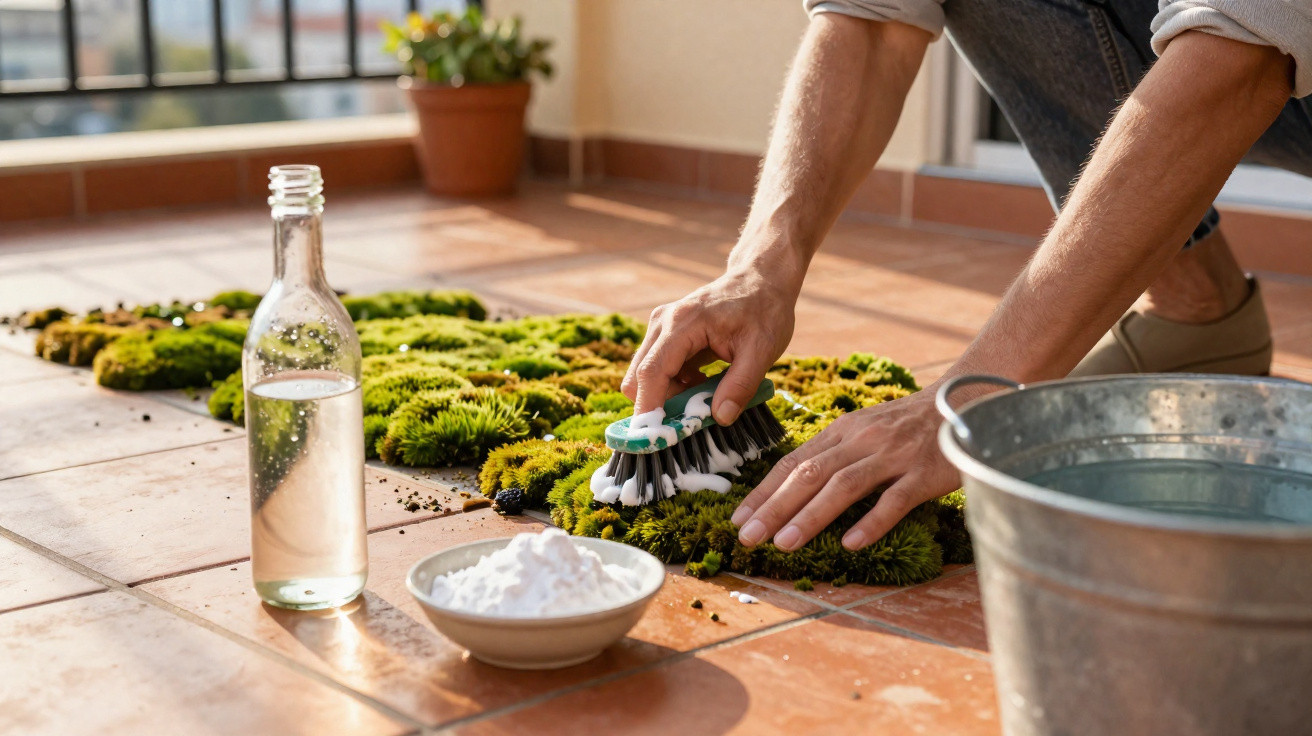
What many people find irritating can be fixed with a straightforward trick using everyday kitchen staples.
Anyone with paving stones, concrete flags or garden paths outdoors will know the issue: as soon as winter has passed, a green film starts to spread. It looks untidy, it can make the surface dangerously slippery, and old-fashioned scrubbing usually only buys you a short break. The most effective helpers are often already in your kitchen cupboard - and they cost next to nothing.
Why moss clings so stubbornly to patios
Moss thrives wherever it stays damp and shaded. Patio slabs, driveways, garden paths, walls and steps hold on to water after rain. If the surface remains wet for long periods and doesn’t get much sun, moss settles in as if it were a spa.
Many people instinctively reach for a stiff brush and start scraping and scrubbing. It can look better for a moment, but the green layer often returns within days. The reason is simple: scrubbing tends to remove only what you can see. In the tiny cracks and joints, spores and so-called rhizoids - root-like structures - remain. They survive the attack and quickly grow back.
Chemical moss removers from DIY stores can work well, but they often include ingredients that may put flower beds, lawns and soil life under strain. If you’re trying to keep your garden healthy, you probably don’t want to pour an aggressive chemical cocktail across your paving.
"Moss always comes back when the cause - constant damp and shade - isn’t addressed and only the surface is cleaned."
Timing matters too. Treating on rainy days is pointless because the water dilutes the mix and washes it sideways. Dry, overcast days are ideal - the solution stays on the surface longer without evaporating too quickly in strong midday sun.
The powerful cupboard duo: vinegar and bicarbonate of soda
Two kitchen favourites can be surprisingly effective against moss: white household vinegar and bicarbonate of soda (or baking soda). When dissolved in warm water, they create a cleaner that not only loosens moss but can also make regrowth more difficult.
Vinegar contains acetic acid, which penetrates moss cushions and attacks their cell structure. Bicarbonate of soda is mildly alkaline and draws moisture from the plant, particularly around the rhizoids. Combined, you get a double action: the visible growth dies back, and the conditions for fresh colonies become less favourable.
Adding a small amount of washing-up liquid can boost the result. It acts as a wetting agent, helping the solution cling to the moss instead of running straight off.
What you need for a moss clear-out
- White household vinegar (neat or slightly diluted)
- Bicarbonate of soda or baking soda
- Washing-up liquid (optional, but very helpful)
- Hot water
- Bucket or tub
- Stiff brush or a yard broom with hard bristles
The same basic principle can be applied to other irritating garden “nuisance plants”: understand what helps them thrive, then treat them specifically - rather than reaching for chemicals at random.
Step-by-step: how to get rid of moss properly
1. Prepare the surface thoroughly
Start by sweeping the whole patio. Remove leaves, soil, grit and any loose debris. If you leave that behind, it can soak up the solution before it ever reaches the moss. The effort you put into sweeping will pay off later when you scrub.
2. Mix the solution
Fill a bucket with hot water. Add a generous splash of vinegar, then two to three tablespoons of bicarbonate of soda, plus a small squirt of washing-up liquid. Give it a quick stir - it will foam a little, which is completely normal. Once the fizzing calms down, the mix is ready to use.
3. Apply and leave it to work
Pour the liquid liberally over all affected areas. Make sure you cover joints, corners and steps as well. It’s fine if it forms small puddles - the more thoroughly the moss is soaked, the stronger the effect.
"At least 15 to 30 minutes of contact time is crucial so that acetic acid and bicarbonate of soda can penetrate into the lower layers of the moss."
If you start brushing too soon, you noticeably reduce the impact. With heavy growth, you can leave the mix on longer, as long as the surface doesn’t dry out.
4. Scrub and rinse
After the waiting time, work the area with a stiff brush using circular motions. In many cases, the moss will come away in thick clumps or even in sheets. Rinse with clean water afterwards - using a watering can, a hosepipe, or, if you have one, a pressure washer on a low setting.
When rinsing, aim the water flow away from flower beds, vegetable patches and lawns. The acidity in vinegar can damage leaves and roots there, especially on young plants.
Keeping your patio moss-free in the long term
Once the deep clean is done, the real job starts: setting things up so moss struggles to return. Standing water is an ideal breeding ground. If rain doesn’t drain properly or puddles form, it’s worth checking the slope and drainage.
Shade is just as important. Overhanging shrubs and low branches block light from reaching the paving. A moderate prune lets more sunlight onto the surface - and moss does not enjoy that.
- Channel rainwater away so puddles don’t linger
- Prune shrubs and trees so more light reaches the ground
- Remove leaves and dirt regularly, especially in autumn
- Repeat a light vinegar–bicarbonate of soda treatment every two to three months as prevention
A gentle pre-treatment in spring and again in late summer can keep surfaces clean for years, without a constant battle with the brush.
Risks, limits and sensible add-ons
As useful as this kitchen mix is, it shouldn’t be used without a bit of care. On delicate natural stones - such as polished marble or limestone - vinegar can etch or dull the surface. It’s best to test a small, inconspicuous spot first.
Also avoid leaving metal joints, zinc guttering or decorative metal elements sitting in vinegar water. Brief contact is usually fine, but prolonged soaking can leave marks.
For very large driveways or heavily weathered slabs, a patio surface cleaner attachment for a pressure washer can be a practical option. A combined approach often works well: treat first with vinegar and bicarbonate of soda, then clean mechanically. This can help lift deeper-set residues more effectively.
Practical examples from everyday garden life
If you have lots of ground cover or dense planting around the patio, you may be encouraging moss without realising it. Low, thick plants hold moisture for longer, which can promote moss along slab edges. Simply leaving a little more space between the border edge and the paving can make a surprising difference.
Conversely, a narrow strip of gravel between the border and the slabs can act as a “buffer zone”: water drains away faster, and soil and plant debris are less likely to end up on the patio.
"A combination of small structural tweaks, regular sweeping and a simple home-remedy solution keeps outdoor surfaces clean and safe to walk on in the long run."
If you keep these points in mind, you won’t be staring in frustration at a green-covered patio each spring. Instead, you can reach for a bucket and brush and usually have it under control after a single treatment for many months.
Comments
No comments yet. Be the first to comment!
Leave a Comment