
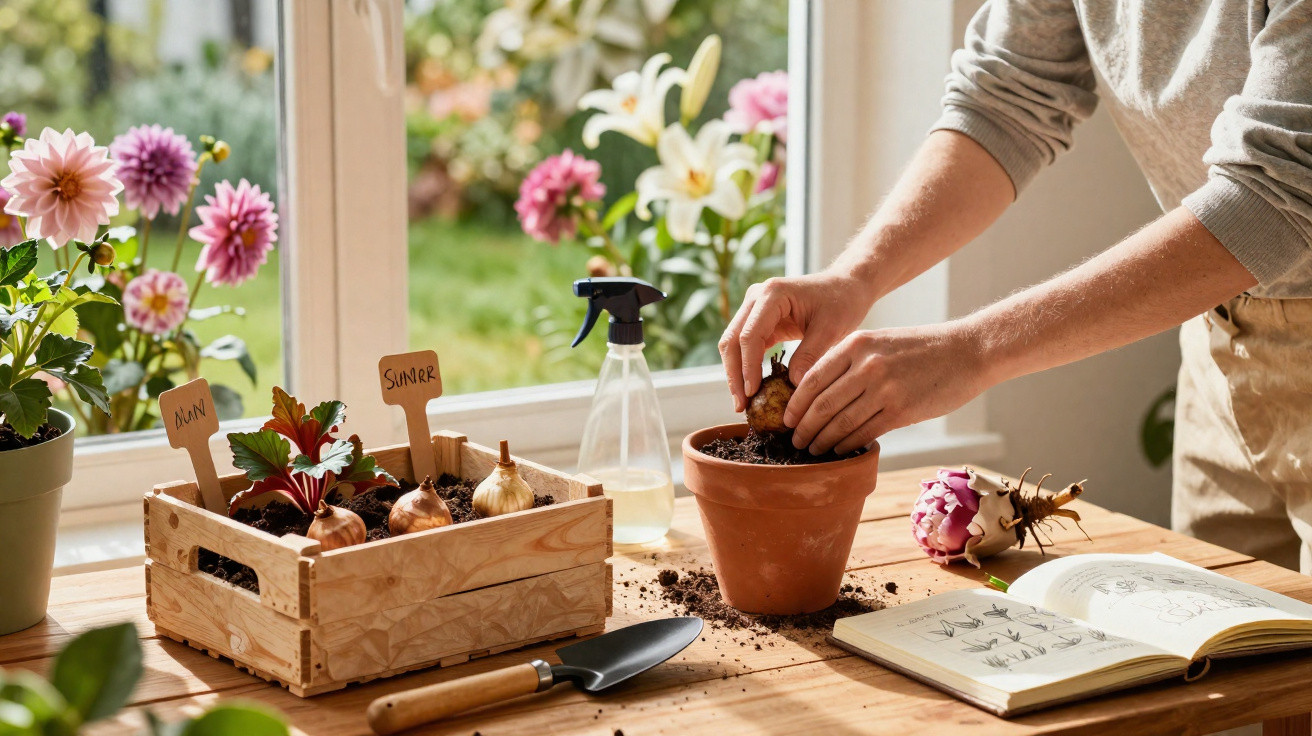
If you spend March simply admiring the first spring flowers, you can miss a crucial stage happening quietly in the background. This brief window largely determines whether your borders burst into colour in early summer - or whether they look bleak for weeks once spring has finished. Four bulb and tuber plants are particularly important here.
Why March sets the course for summer flowering
In spring, far more is going on in the soil than you can see at a glance. While daffodils, tulips and hyacinths are gradually fading, the next wave of plants can already be getting underway. If you plant certain tubers and bulbs now, they begin straight away - but if they sit in the shed until late April or May, gardeners lose valuable weeks.
"If you plant summer bloomers late, you often push flowering back to July - and the beds stay empty for a long time after the spring flowers."
In many areas, the window from early March to mid-May works well, as soon as hard frosts have passed and the ground is no longer ice-cold. March gives a clear head start: plants have extra time to make roots and put on strong growth. This advantage is especially obvious with four classics: dahlias, begonias, lilies and peonies.
Dahlias: colour bombs from June right into autumn
Dahlias are among the most rewarding summer bloomers you can grow. Their tubers cannot cope with frost, yet they need a long growing season. That is why experienced gardeners begin in March - and usually not out in the border, but somewhere frost-free and protected.
Starting dahlias correctly in March
- Check the tubers, cutting away any soft or rotten parts
- Fill wide pots with loose, nutrient-rich compost
- Set the tubers in shallowly, leaving the eye or stem base just visible
- Position them somewhere bright and frost-free; keep them slightly moist, but never waterlogged
With this early start, the plants shoot away under cover or indoors. Once nights are consistently mild, the pre-started dahlias can be moved out into the garden. Gardeners who do this often enjoy abundant flowers from June - rather than waiting until high summer.
Dahlias are also notable for their huge range of forms. Everything is possible, from pompon-like balls to single flowers through to exotic-looking cactus types. They suit traditional cottage gardens as much as crisp, modern schemes, and they also look excellent in large containers.
Begonias: a secret weapon for shady corners and north-facing balconies
Where dahlias thrive in full sun, begonias are happier in partial shade or shade. People with north-facing balconies or small back courtyards often struggle with bare, dark spots. This is exactly where tuberous begonias show what they can do.
How to get begonia tubers off to a strong start
In March, it is best to lay begonia tubers shallowly in trays or pots filled with a light, humus-rich growing medium. The small hollow on the top of the tuber is the tell-tale feature - and it should face upwards. Place the pot somewhere bright but frost-protected, and keep the compost evenly moist.
"Begonias produce flowers all summer long, even where the sun only reaches briefly or indirectly."
Later in the year, move the pots to their final positions: the shady balcony, the north side of the house, or beneath light-canopied shrubs and trees. Regular watering is part of their care, as the plants react badly to extended dry spells. Before winter, lift the tubers back indoors, allow them to dry, and store them somewhere cool and frost-free - so they will flower again the following year.
Lilies: elegant structural plants for the border
Lilies add architecture to flower borders. Their straight stems and, in some cases, strongly scented flower spikes rise above smaller perennials and summer bedding. To ensure they get going in time, their bulbs also belong in the ground in March.
Choosing the right spot for lilies
Lilies prefer deep soil that drains well. Waterlogging quickly causes rot, so on heavy ground it helps to add a layer of sand or fine gravel to the planting hole. Set the bulbs around two to three times as deep as the bulb is tall.
| Position | Benefit |
|---|---|
| Full sun | stronger flowers, ideal for many varieties |
| Partial shade | longer flowering period, less stress in hot weather |
Depending on the variety, some lilies begin flowering as early as late spring, while others wait until high summer. If you combine different types, they help bridge the gap between spring bulbs and perennials: as tulips and daffodils disappear, lilies take over with their elegantly upright stems.
Peonies: March work for the years ahead
Peonies, whether herbaceous or shrub forms, are among the most long-lived garden plants you can grow. They are not for the impatient, though: after planting, it typically takes two to three years before they reach their full flowering potential. That is precisely why it is worth getting the spade out in March - even if the payoff comes later.
Helping peonies establish for the long term
This plant prefers sunny to lightly shaded positions and deep, fertile soil. Spacing is crucial: peonies hate being moved repeatedly. Giving them enough room from the start avoids stress later - for you and for the plant.
"Once planted correctly, peonies can stay in the same place for decades and flower more richly every year."
Plant herbaceous peonies so that the buds sit only a few centimetres beneath the surface. If they are set too deep, flowers may fail to appear. Especially in the first year, patience and a reliable water supply during dry spells pay off. A strong root system then develops underground, and later the plant can largely look after itself.
How these four groups close the flowering gap in the garden
Ideally, these four plant groups work together like interlocking cogs. Spring flowers start the year, then the summer bloomers planted in March take over. One possible sequence looks like this:
- Spring: tulips, daffodils, hyacinths
- Early summer: first lilies, early dahlias
- High summer: dahlias in full bloom, begonias, more lilies
- Late summer to autumn: later dahlias, begonias, and in some cases still lilies
Peonies round out the picture over the long term, bringing bold, fragrant, ball-like blooms in late spring. Using March well helps create an unbroken run of flowers from May through to autumn.
Practical tips to avoid common planting mistakes
Many issues come not from the plants themselves, but from small oversights at planting time. A few simple points help prevent problems:
- Use only healthy tubers and bulbs, with no soft or mouldy patches
- Avoid waterlogging: plan a drainage layer on heavy soils
- Add labels or make a sketch so you can find planting spots again in summer
- Do not plant too closely - airflow reduces fungal disease
If you garden in areas prone to late frosts, it is safer to start particularly sensitive plants such as dahlias and begonias indoors and only move them outside after the mid-May frost period. Lilies and peonies cope far better with cooler conditions, as long as the ground is not completely frozen solid.
Why the effort pays off over time
March jobs can feel underwhelming at first. You see newly filled pots and freshly worked borders, but no display of flowers yet. That is the trick: the real show starts weeks later, when other gardens slip back into a green nothing.
When you consistently rely on these four groups, the overall picture quickly changes. Instead of a short spring fireworks display, you get a long, colourful progression. And many of these plants - especially peonies and lilies - become a dependable garden framework that strengthens year by year.
With a bit of planning in March, you end up with a garden that flowers not in isolated stages, but in waves. The dreaded “dead period” between spring and summer loses its bite - and turns into one of the finest parts of the gardening year.
Comments
No comments yet. Be the first to comment!
Leave a Comment