
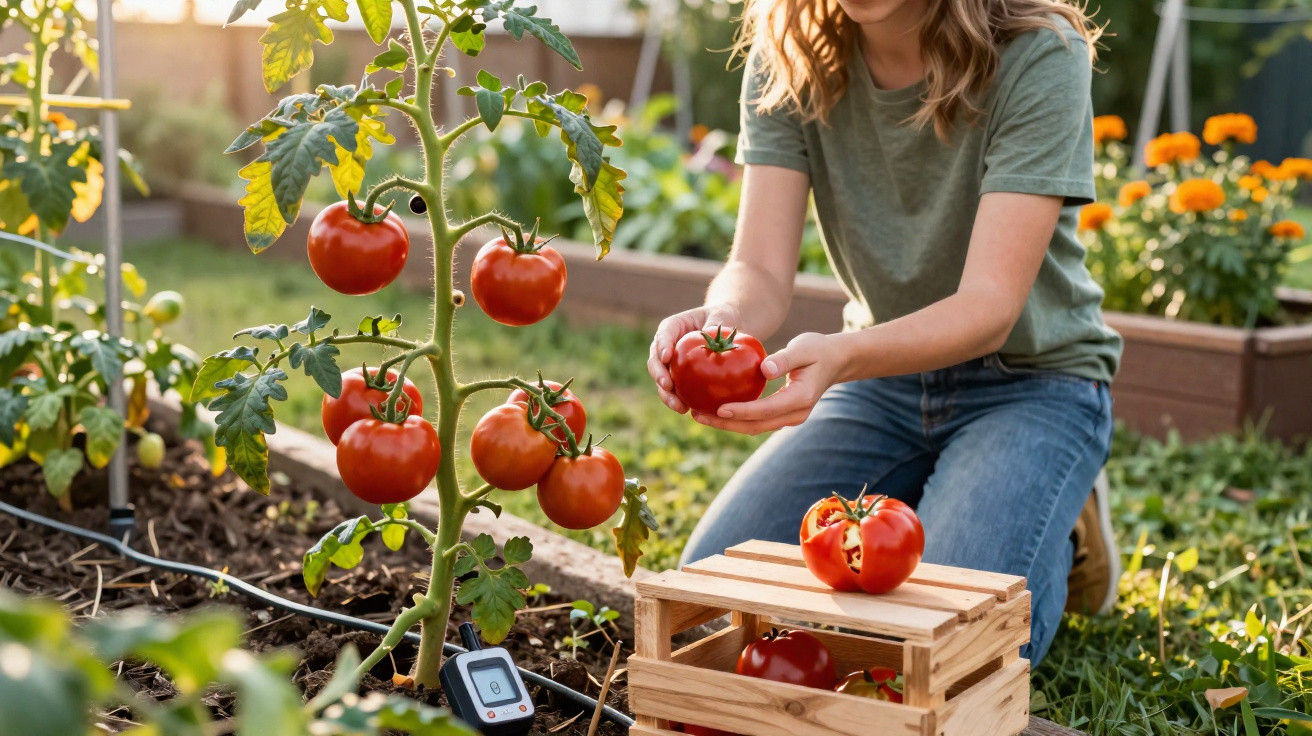
The first slivers of morning sunshine, grass still damp with dew, coffee steaming in your hand - and you head to the tomato bed with a quiet sense of pride. The plants look lush and green, smelling of summer and an Italian holiday. You reach for the plumpest, reddest fruit you’ve been watching for weeks. Then you spot it: a long split in the skin. Like a neat scar - except this one ruins everything. Juice is already beginning to seep out, ants have taken an interest, and you’d been waiting for this single tomato. Suddenly it feels as though your own garden has let you down. And that familiar question pops up again: why does this happen to me every year?
What’s really behind split tomatoes
Anyone who’s grown tomatoes for a season knows the odd mix of pride and frustration. The plants shoot up, set fruit like mad - and then the tomatoes crack just as you’re about to pick them. Never when they’re still green. Always at the exact moment they’re meant to look perfect. It’s easy to assume pests or “some kind of fungus”. In reality, water, sunshine and timing are the real actors behind the scenes. When it comes to stress, tomatoes are absolute drama queens. Cracks are their quiet way of saying that something in the system has tipped out of balance.
The classic scenario looks like this: three weeks of high-summer heat with barely any rain, and you water in the evening when you remember. The soil turns dusty, the leaves sometimes droop. Then a weekend of non-stop thunderstorms rolls in. Two days later, the best-looking fruits have split. Gardening forums are full of stories like it. Some hobby growers say that in “bad years” almost 40 percent of their tomatoes have burst. Others notice that large beefsteak varieties are affected far more often, while small cocktail tomatoes hardly seem bothered. These patterns aren’t random - they’re a pretty accurate clue to what’s happening inside the fruit.
Inside each tomato is dense, juicy tissue that responds to water like a sponge. If the plant goes through a dry spell and then suddenly receives lots of water - from heavy rain or a big watering session - the fruits swell rapidly. The skin, which formed slowly and steadily, can’t keep pace with that sudden growth spurt. It tightens, thins, and tears at the weakest point. This isn’t a sign of “bad tomatoes”; it’s a clear signal that the plant has gone from zero to one hundred in water supply. You can almost read it as an alarm for inconsistent watering habits.
How to bring calm to your tomatoes’ watering chaos
The most powerful lever against cracking is surprisingly unglamorous: consistent moisture. It may sound dull, but it can save an entire harvest. Instead of watering rarely but heavily, smaller amounts given regularly work far better. A steady routine helps - for instance, every morning before the sun gets intense. A mulch layer of grass clippings, straw or shredded plant material keeps moisture in the soil, dampens extremes and protects fine roots. If you want to go a step further, lay a drip hose so water is delivered slowly and evenly. The goal isn’t waterlogged soil - it’s a stable moisture level, like well-balanced indoor humidity.
Many tomatoes split straight after heavy summer storms, especially if they’re grown outdoors without any cover. You can’t control the rain, but you can change the starting conditions. Plants that already have enough water through their roots won’t “gulp” down rainfall as greedily. They stay calmer - on the inside as well. What happens to a lot of people is this: hardly any watering during the week, then guilt on Saturday and half a watering can per plant in one go. Let’s be honest: hardly anyone manages to do it daily. And that exact rhythm is what throws fruit growth out of sync. Less frantic intervention, more routine - that’s often the real game-changer.
An experienced neighbour said one August, right when everyone was complaining about splitting tomatoes again:
“Tomatoes don’t split because they’re temperamental. They split because we treat them like a houseplant that we occasionally forget.”
A second factor that’s often underestimated is variety choice. Large oxheart types and many traditional beefsteak varieties are more prone to splitting, while plenty of modern cultivars have tougher skins. It’s especially useful to grow a small mix:
- At least one crack-resistant variety (cocktail or Roma tomatoes)
- One large variety for those special eating moments - with the understanding it’s more sensitive
- A few plants in pots against a sheltered house wall, plus a few in the bed - to spread the risk
That way the risk is shared, rather than your entire harvest depending on one diva with paper-thin skin.
Seeing your tomatoes with different eyes
At some point during the season, something shifts: you stop taking every split tomato as a personal insult. Instead, you start reading them like a summer logbook. Lots of rain in July? More cracks. A long, steady June? Smooth skins and deep red fruit. Once you pay attention to these links, you quickly notice that the garden reflects our habits - not just the weather. And tomatoes are a brutally honest mirror. They’ll forgive a surprising amount - just not sudden extremes.
| Key point | Detail | Benefit for the reader |
|---|---|---|
| Consistent watering | Fixed routine; better to water little and often than rarely and heavily | Fewer tension cracks in the skin, more reliable harvests |
| Mulching and soil protection | A layer of straw, grass or leaves keeps moisture steady | Less stress for plants, less day-to-day watering effort |
| Smart variety choice | A combination of crack-resistant and more sensitive varieties | Risk is spread; more moments of enjoyment despite difficult summers |
FAQ:
- Why do my tomatoes split just before harvest? Most commonly, they’re reacting to a sudden surplus of water after a dry period. The flesh expands faster than the skin can adapt, so a split forms.
- Are split tomatoes still safe to eat? Yes - as long as the crack is fresh and you can’t see rot or mould. Use them straight away (for sauce or salad, for example) and don’t store them for long.
- Does a roof over the tomato bed really help? A rain cover reduces sudden swings in water intake and keeps leaves drier. Many hobby gardeners report noticeably fewer cracks and fewer diseases.
- Which varieties split less? Smaller cocktail, Roma or cherry tomatoes are often tougher. Some newer cultivars are also labelled specifically as “crack-resistant”.
- Can too much fertiliser cause cracking? Indirectly, yes: rapid growth from over-fertilising increases pressure in the fruit. Combined with irregular watering, the risk of splitting rises significantly.

Comments
No comments yet. Be the first to comment!
Leave a Comment