
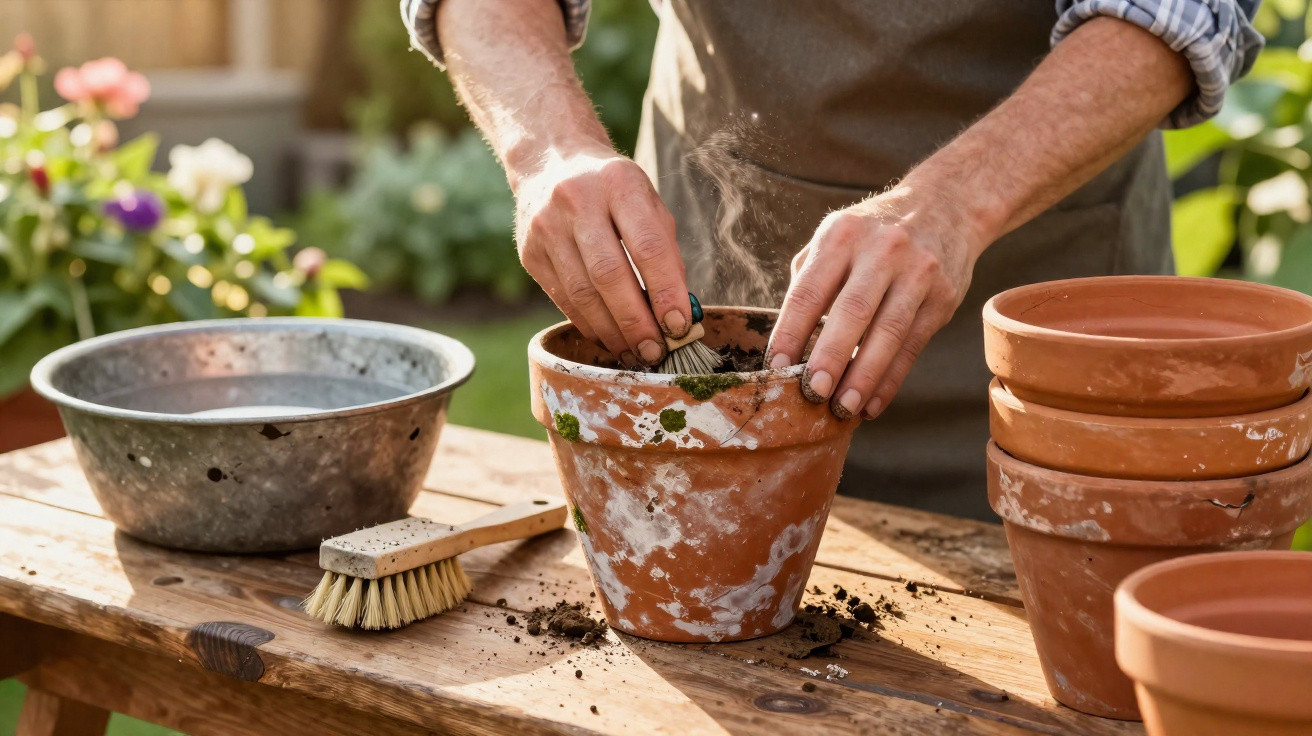
The autumn wind whistles across the balcony, and the summer flowers have long since given up. Among the dried-out stems, they catch the light: those dull, white crusts on your clay pots. A faint bloom that felt “rustic” in spring now looks more like neglect. You pick one pot up, turn it in your hands, and suddenly you notice the hairline cracks along the rim and the green film on the inside. You can almost hear the terracotta grit softly as you drag a fingernail across it.
The season is done, of course. But what if this is exactly the point where the next one starts? Clean them once. Care for them once. Take a deliberate look before everything disappears into the cellar again. Because clay pots remember more than we tend to think.
Why clay pots “age” - and what the marks are telling you
When people buy new plants in spring, they focus on flowers, foliage and variety names. Hardly anyone really looks at the pots themselves - until the roughened rims, white streaks and green patches become impossible to ignore. Clay pots are like small archives of the previous gardening year: they hold onto limescale, fertiliser residue, waterlogging, sun and frost. And they show, without mercy, how they’ve been treated.
A pot with fine white efflorescence points to hard tap water. A pot with a chipped rim hints at a winter spent half in water, half in ice. If you pause for a moment and learn to read these traces, a pattern starts to emerge.
Here’s a scene from a city allotment: in October, Sabine stacks her clay pots “just for a moment” behind the shed - for the third time. A few still contain soil; some are full of dead roots; others are half-filled with rainwater. Come March, she’s shocked by how many have cracked. Two have split along the side, and one contains a thick slab of algae and moss, almost like a tiny swamp habitat. “Strange - they were still fine,” she says, tipping shards into the bin. Later, she does the maths: if those had been new pots, she would easily be down €50. A year after that, she photographs the same pots again - this time after cleaning and storing them properly. Not a single one is broken, simply because she stayed an extra hour in autumn.
This isn’t about perfectionism; it’s about physics and time. Terracotta is porous: it breathes, absorbs water and releases it again. If the walls stay wet, moisture penetrates deep into the material. Add frost, and the water inside expands, creating stress cracks. Limescale and fertiliser salts settle in the pores, changing the surface and making it more brittle. Then there are microorganisms - algae, fungal spores - a mix that new plants don’t necessarily appreciate.
If you don’t clean your pots, you end up planting into the past each year. And sometimes you wonder why fresh compost behaves as stubbornly as old chewing gum.
How to get your clay pots back into shape - step by step
The best time to prepare clay pots for the next season is the moment the last plant has moved out. Start by knocking out all the soil, then remove root remnants - including the fine bits. A wooden stick or an old spoon helps you reach grooves and corners.
Next, give the pots a warm soapy soak: a tub or large bucket of water with a few squirts of eco-friendly washing-up liquid. Let them sit and soften properly - 30 minutes, longer if you like. Then scrub inside and out with a stiff brush until the coating is gone or at least noticeably reduced. For stubborn limescale rings, use a 1:1 mix of water and vinegar, leave it to work briefly, then brush again. Finish by rinsing with clean water.
Many people then skip the most important step: drying - and drying thoroughly. The pots need to be completely dry before they go into the cellar, garage or a storage box. So don’t pile them straight into a dark, damp corner; stand them out first - ideally upside down on wooden slats or old newspapers.
We all know that urge to “just quickly” put everything away. Let’s be honest: nobody manages that perfectly every time. But this in-between stage is exactly what decides whether mould and musty smells develop. Anyone who has ever sniffed a stale pot knows how stubborn that odour can be.
At the same time, it’s worth giving your clay pots a quick “health check”. Small cracks on the rim? A hollow sound when you tap them? Those are warning signs. Cracks often spread over winter as the material expands and contracts. Some gardeners gently tap each pot: if it sounds solid, it stays; if it sounds dull and brittle, it goes.
“A good clay pot will stay with you for ten, fifteen years - if you treat it like a tool and not like packaging,” says an older gardener at an allotment site, running his hand almost tenderly over an old, scarred pot.
- Remove soil and roots completely, including from the drainage hole
- Soak pots in warm soapy water and brush thoroughly
- Lift limescale rings with a water–vinegar solution, then rinse well
- Let pots dry fully before stacking or storing
- Sort out damaged pots or repurpose them (decor, saucers, drainage shards)
When clay pots tell stories - and why you should keep writing them
At some point, you notice your relationship with your clay pots has shifted. They’re no longer just “containers” that happen to hold soil. They become constants among all the plants that come and go - familiar shapes that reappear year after year.
If you clean, sort and stack your pots deliberately, you naturally build a small system: the big ones at the back, the slim ones at the front; some set aside for tomatoes, others for herbs. As a result, it isn’t only the garden that grows - your routine does too. And suddenly the start of the new season feels less chaotic, more like a reunion.
And yes: sometimes terracotta becomes a mirror for what slipped in a gardening year. Heavy crusting can point to too much fertiliser; mossy interiors to constant watering without checking the compost first. Feeling embarrassed doesn’t help. The more interesting question is: what changes next spring? Maybe you’ll collect rainwater, feed less, and trust your fingers before tipping the watering can.
Gardening is rarely glamour - it’s mostly quiet adjustments. Clay pots are surprisingly honest partners in that.
Perhaps you’ve got a stack of half-forgotten clay pots somewhere right now: dusty, chipped, a little neglected. You could ignore them, buy new ones, and add yet more plastic to the loop. Or you can take an hour, scrub, rinse and sort - and see, in the damp terracotta, the whole record of recent years. There’s something calming in it, almost meditative. And it creates a strangely clear starting point.
The next season doesn’t begin when the first tomato plants appear in the garden centre. It begins the moment your clay pots are clean, dry and waiting for their job.
| Key point | Detail | Benefit for the reader |
|---|---|---|
| Cleaning with a system | Remove soil, soapy soak, brushing, dissolve limescale with a vinegar solution | Extends pot lifespan and creates healthier conditions for new plants |
| Thorough drying | Stand pots upside down and allow to dry completely before storage | Prevents mould, smells and frost damage in winter storage |
| Mindful maintenance | Check for cracks; discard or repurpose damaged pots | Saves money, reduces waste and helps build a reliable core set of pots |
FAQ:
- How often should I clean clay pots? Once a year is usually enough - ideally after the season, when the pots are emptied. If you’ve had diseased plants, an extra clean straight after removing them is worthwhile.
- Is hot water enough, or do I need detergent? Hot water and a brush go a long way, but mild soap lifts greasy residue and fertiliser deposits more effectively. For hard limescale rings, use a water–vinegar mix, leave it briefly, then rinse thoroughly.
- Do I need to disinfect clay pots? Only if plant diseases or pests were involved. In that case, after cleaning you can dip them briefly in very hot water or wipe with a light vinegar solution, then let them dry fully.
- What’s the best way to store clay pots over winter? Keep them dry, frost-protected and ventilated. Stack them upside down, don’t leave them standing in water, and avoid sealed plastic bags so any remaining moisture can escape.
- What should I do with badly damaged pots? Cracked or broken pots can still be used as drainage shards in the base of larger containers, or as decorative pieces in a bed. For new plantings, heavily damaged pots are generally too risky.

Comments
No comments yet. Be the first to comment!
Leave a Comment