
Between bare fences, empty beds and stark branches, a garden can feel bleak in late winter. Yet this is exactly when a native evergreen favourite begins its big performance-many people recognise it from hedgerows and footpaths, but hardly anyone deliberately makes space for it at home.
A familiar plant with a fresh reputation
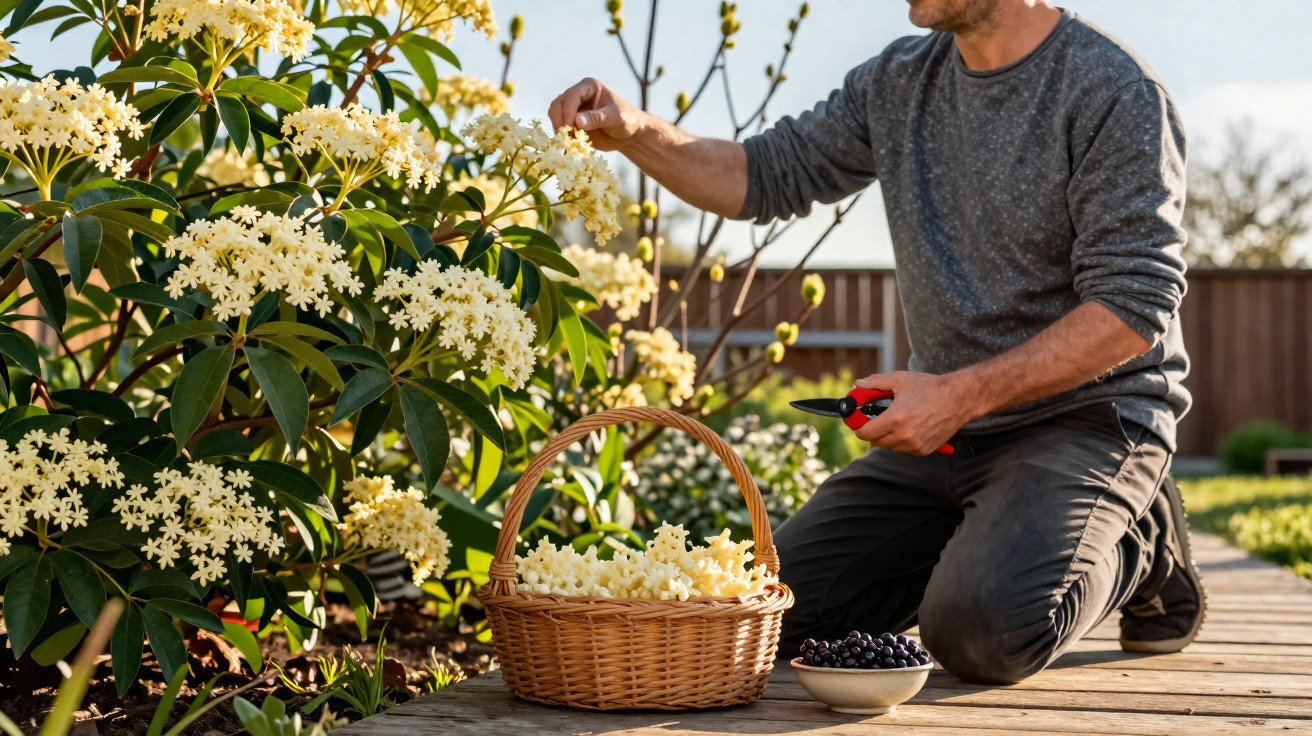
This is the black elder, botanically Sambucus nigra. It’s a shrub found across much of Central Europe, and still it’s surprisingly rarely planted on purpose in gardens. In summer it offers dense green growth; in winter it stands as a delicate silhouette; and it provides both flowers and fruit for people and wildlife-on paper, it’s got everything you’d want from a “multi-purpose shrub”.
"If you plant an elder now, you get screening, fragrant blossom, food for insects and birds-and free ingredients for the kitchen."
In winter its leafless shoots are easy to overlook. But from late spring onwards the shrub seems to erupt: broad, cream-coloured flower heads, an intense and unmistakable scent, and a constant buzz of insects that can feel as busy as an airport.
Quick facts: what makes black elder so interesting
| Botanical name | Sambucus nigra |
|---|---|
| Common name | Black elder |
| Height | About 3 to 6 metres |
| Spread | Around 2 to 4 metres |
| Position | Sun to partial shade |
| Hardiness | Down to around -20 °C |
| Leaves | Deciduous; drops its leaves in winter |
That makes elder a strong fit for wildlife-friendly gardens, along boundaries, or as part of a mixed hedge. It doesn’t look formal or sterile-more rural, almost “farmyard” in character-a look that is very much back in fashion.
Why this shrub wakes the garden in spring
As soon as temperatures rise, elder gets going. First it produces strong new growth, then the broad flower umbels follow quickly. They sit on the shoots like little clouds of whipped cream and catch the eye from a distance.
- Appearance: large, flat flower heads in creamy white
- Fragrance: powerful, sweet, unmistakably “elder”
- Wildlife: heavily visited by bees, hoverflies and butterflies
- Effect in the garden: softens harsh fencing, frames seating areas, fills bare corners
In summer, those flowers turn into densely packed clusters of black berries. For blackbirds, thrushes and many other bird species, they’re a ready-made feast. If you want more life in your garden, elder works as a genuine magnet.
Plant now: how to get off to the best start
The ideal time to plant elder is early spring, once the ground has thawed but is still holding plenty of moisture. March and April are particularly well suited.
The right spot in the garden
Elder is forgiving, but a few basics are still worth following:
- Choose a site in sun to partial shade
- Don’t squeeze it right up against tight walls-it needs room
- It works well at the edge of the plot or within a mixed hedge
- Varieties with dark or golden foliage particularly appreciate a brighter position
"If you want to give your garden structure, blossom, fruit and privacy in one go, start with an elder along the edge of the plot."
Planting instructions in a few steps
- Dig a planting hole at least twice as wide as the root ball.
- Mix the excavated soil with well-rotted compost.
- Place the shrub so it sits at the same depth as in the pot, or slightly deeper.
- Backfill with the soil-and-compost mix and gently firm the ground.
- Water thoroughly until moisture has penetrated deep into the soil.
- Add a mulch layer of leaves, grass clippings or pieces of bark.
Mulch helps the soil stay moist and shields young roots from temperature swings. In exposed, windy spots, a support stake can be useful until the elder has properly rooted in.
Care: minimal effort, big impact
Once established, the shrub needs very little attention. It dislikes waterlogging, but once its roots reach deeper soil it usually copes well with short dry spells.
How to prune elder properly
A quick annual check is usually enough:
- In spring, remove dead branches, inward-growing shoots, or anything that crosses and rubs.
- Every few years, cut out very old, thick stems close to the ground to encourage new replacement shoots.
- Cut back any unwanted root suckers early if they appear where you don’t want them.
If you prune extremely hard, you’ll give up part of that year’s flowering. In exchange, the shrub responds with strong, dense regrowth-useful when you need to bring it back into shape.
The kitchen and the garden both benefit
Elder isn’t just attractive and ecologically valuable-it also adds flavour to the kitchen.
Flowers – the classic spring ingredient
Harvest the flower heads when the blooms have just opened and before they begin to brown. A dry morning after one or two sunny days is ideal. Common uses include:
- Syrup made from flowers, sugar, water and lemon
- Flower heads dipped in batter and fried as a sweet treat
- Flavoured vinegar or sugar
For many families, elderflower cordial is tied to childhood memories. With your own shrub, you can recreate that taste every year-without artificial additives.
Berries – only enjoy them cooked
The ripe, very dark berries are an important food source for many birds. You can also use some in the kitchen. The key points are:
- Pick berries only when fully ripe
- Never eat large amounts raw
- Always heat thoroughly, for example as juice, jelly or purée
When raw, the berries and other parts of the plant contain substances that can trigger stomach and intestinal upsets. Cooking breaks these components down to a large extent.
Risk of confusion: what gardeners should watch for
In the wild, black elder can grow alongside the poisonous dwarf elder (Sambucus ebulus). Mixing them up would be unpleasant, but you can usually avoid it by checking a few features:
- Black elder: woody, shrub to small-tree habit, several metres tall
- Dwarf elder: herbaceous, bushy, much lower, dies back above ground in winter
- Both have similarly pinnate leaves, but their overall growth habit is clearly different
If you plan to use berries or flowers from your own garden, make sure you truly have black elder. When in doubt, consult a plant guide or ask for advice at a specialist nursery.
Why elder fits the moment perfectly
Many home gardeners are looking for plants that do more than simply look pretty. They want toughness, benefits for wildlife, and-ideally-something useful as well. That overlap is exactly where black elder sits.
It suits summers that are becoming drier, because after the establishment phase it manages with little extra water. It supports pollinators, feeds birds, and adds a gently “wild” note to front gardens that can otherwise feel overly neat and lifeless. Combined with hazel, cornelian cherry or wild roses, it creates lively hedges that offer something for much of the year.
So if you’re standing in front of a garden that feels empty and tired after winter and you’re wondering what to start with now, elder is a very safe choice. Once planted, it returns reliably every spring-with clouds of blossom, humming life, and an invitation to experience the garden with more than just your eyes.
Comments
No comments yet. Be the first to comment!
Leave a Comment