
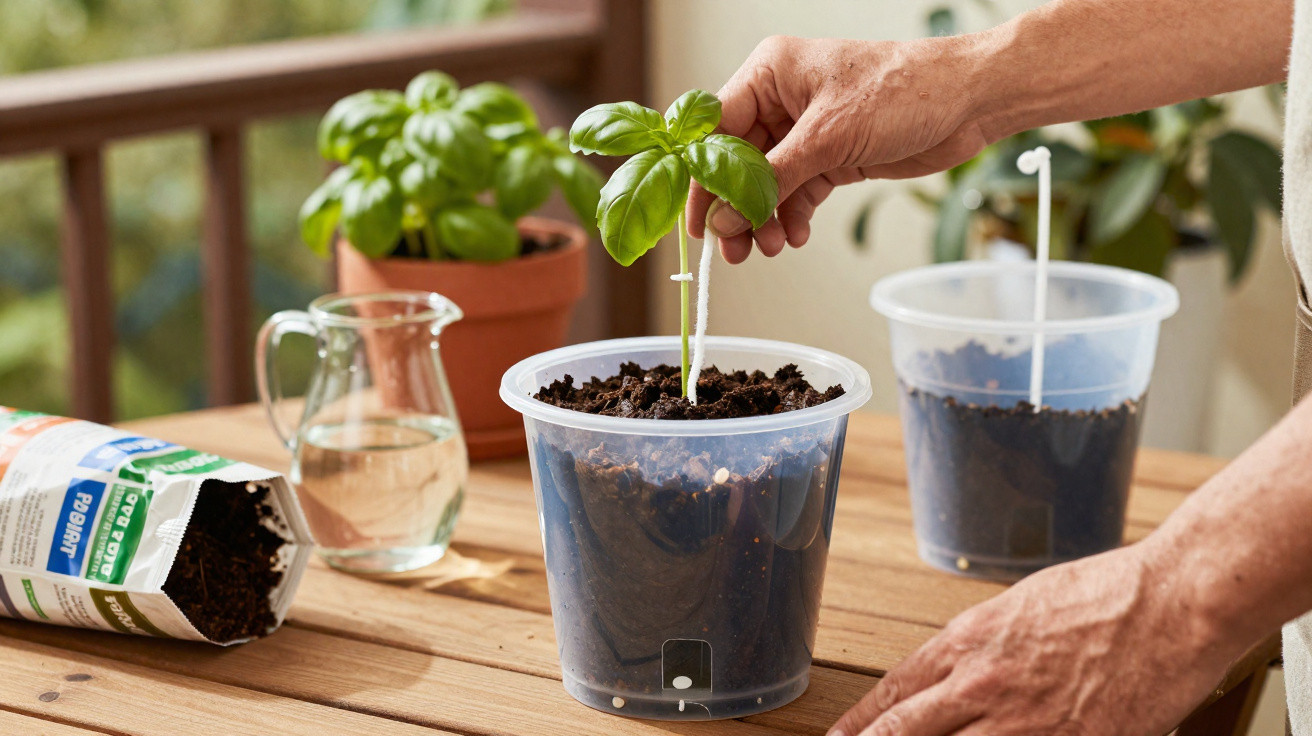
A self-watering pot with a wick keeps the water reservoir separate from the growing medium and relies on capillary action to deliver moisture slowly to the roots. In this set-up, an absorbent wick material is used to guide water from the lower reservoir up into the growing medium.
How does the wick manage to bring water up into the growing medium?
The key principle is capillary action-a process in which water can travel through the tiny spaces found in certain materials. In a self-watering pot, the wick acts like a bridge between the reservoir and the growing medium, allowing water to be drawn upwards little by little.
This doesn’t mean the wick mechanically pumps water. How much moisture is transferred depends on the wick material, how well it contacts the growing medium, and the surrounding conditions. For that reason, the system needs to be assembled so the wick has reliable contact with both the water and the growing medium.
Which detail makes a self-watering pot work?
The reservoir must remain separated from most of the growing medium, so the entire medium is not left sitting in direct contact with water all the time. The wick passes through this separation and serves as the route that carries moisture into the planted area.
There are also designs where a column of growing medium performs a similar role to a wick. In both approaches, the aim is the same: to let stored water below reach the growing medium gradually.
How to assemble a self-watering pot with a wick
Use two containers: one will act as the reservoir and the other will hold the growing medium. Make an opening to thread the wick through, keeping one end in contact with the reservoir water and the other end tucked into the growing medium.
Next, add the growing medium to the upper container and place the plant. Before using the system on a regular basis, pre-moisten the growing medium to help establish good contact between the wick and the material. Refill the reservoir without allowing the water level to rise high enough to touch most of the growing medium directly.
Which plants should not use this system?
A self-watering pot is not suitable for every species. Plants that prefer drier conditions, or that need the growing medium to dry out between waterings, can struggle when moisture is supplied continuously from below.
It’s also important to watch how the plant responds after set-up. If the growing medium stays overly wet, reduce how often you refill the reservoir or adjust the system. Used this way, a self-watering pot with a wick tends to work best for plants that cope well with steadier moisture, and when the system is sized to match the species’ water needs.
Comments
No comments yet. Be the first to comment!
Leave a Comment