
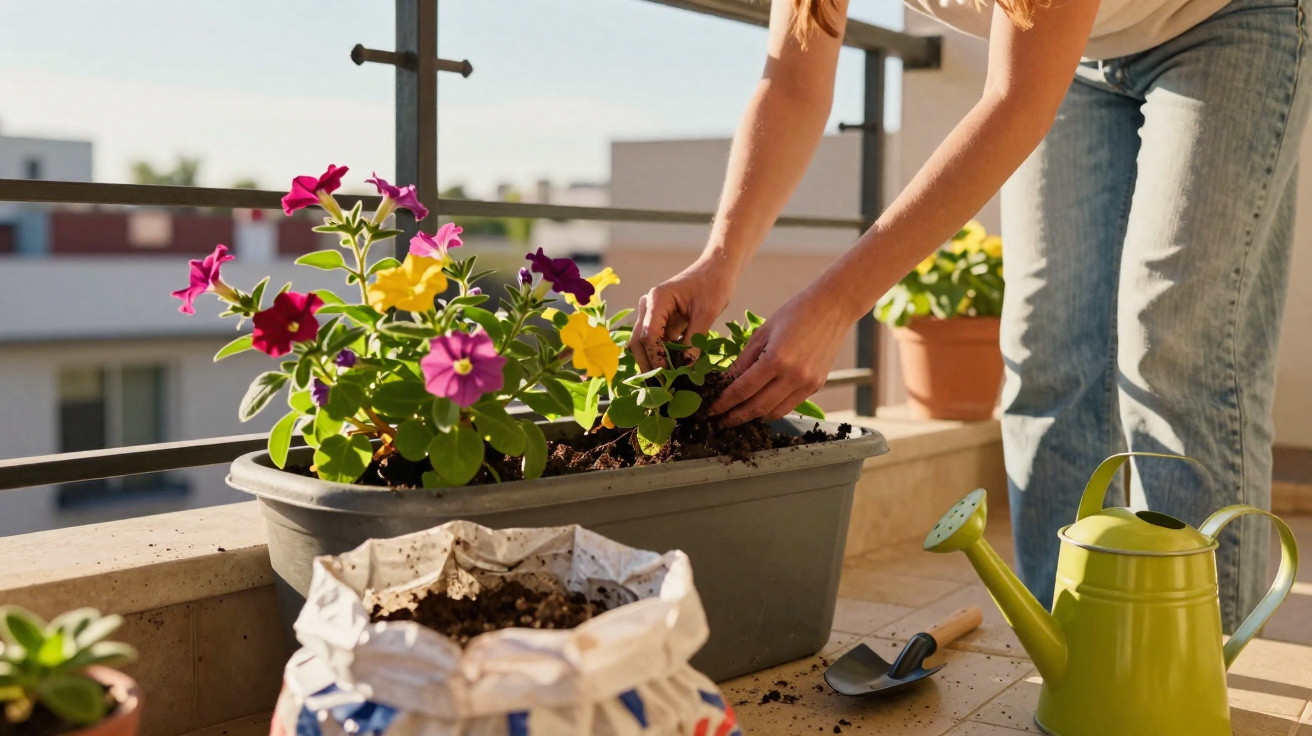
Many people picture balcony boxes so full that colourful garlands of flowers spill over the edge like a waterfall. In catalogues it can look like a professional secret. In reality, it’s usually down to one particular plant - and, above all, choosing the right planting moment in spring. If you hit that window and follow a few basic rules, even beginners can enjoy boxes that keep flowering well into autumn.
The quiet star: calibrachoa, the mini-petunia favourite
Behind countless balcony displays with lush, trailing cascades, the same leading lady is often doing the work: calibrachoa. In garden centres and online it is frequently sold as “Million Bells” or mini-petunia. Botanically it sits in the same family as petunias, but it stays more compact and, in a balcony box, forms a dense mound from which long shoots tumble down.
Typical traits of calibrachoa:
- Height of roughly 15–30 centimetres
- Spread in a box of about 30–60 centimetres
- Hundreds of small, bell-shaped blooms
- Flowers from spring through to the first frosts
With enough light, water and nutrients, a single plant can turn an ordinary balcony box into a thick cushion of flowers. Many hobby gardeners also value one more advantage: the plant more or less “tidies itself”.
"The faded flowers drop off on their own - there’s no need for hours of pinching them out."
Newer breeding continues to push the ornamental appeal even further. Varieties such as “Superbells Magic Double Grapefruit” produce double flowers whose colour shifts from a soft yellow into a rosy orange - almost like a slow-motion gradient. Reports from growers describe plants that “practically explode” in summer and take over the entire box.
Spring: the short window for truly full boxes
Calibrachoa originates from warmer regions and does not tolerate frost. In Central European conditions outdoors, it is grown only as a one-season annual. Plant it too early and you risk stalled growth - or, in the worst case, a complete loss after one cold night.
When exactly you should plant
A practical rule of thumb for balconies and terraces is:
- Plant once there is no longer any risk of night frosts
- Night-time temperatures should be consistently above 8–10 °C
- Depending on the area, this is usually between mid-April and the end of May
If you start very early, for instance in March, it’s easy to knock the plant out of rhythm. Young roots can end up sitting for days in cold, wet compost and only expand reluctantly. It’s better to prepare the box straight after the last frosts. That way, you have several weeks in which the roots can colonise the entire container without being checked.
"In spring the plant works invisibly on its roots - in July all that preparation shows as an avalanche of flowers."
As the spring progresses, the shoots lengthen more and more. By July at the latest, they usually hang clearly over the edge, creating the familiar “waterfall” look. For a properly dense result, you typically need three to four young plants in a medium-sized balcony box.
How to plant successfully in a pot or balcony box
Calibrachoa thrives when the root zone stays open and airy. It quickly reacts to waterlogging with rotting roots and a limp, unhappy appearance. That’s why preparing the container often determines whether you succeed or fail.
Choosing the right pot and compost
- Pick a container with large drainage holes
- Add a bottom layer of expanded clay or broken terracotta shards
- Top with a light, peat-free balcony or hanging-basket compost mix
- Press the compost down only gently; don’t compact it heavily
Many brands sell specialist, highly free-draining composts for balcony planters. These often include wood fibre or other structural materials so water runs through more quickly. That’s ideal for a plant that hates wet feet but still gets thirsty regularly in summer.
Planting the young plants
Before planting, briefly dip the root balls into a bucket of water until no more air bubbles rise. Then position the plants so the top of the root ball sits just below the rim. Three to four plants per standard 60-centimetre balcony box creates a pleasing, full look.
Fill the gaps with compost and water in thoroughly. For the first few days after planting, avoid placing the box in harsh midday sun. A semi-shaded spot helps the roots settle in.
Summer care: abundant flowers without constant effort
If you grow calibrachoa, you want weeks of colour - ideally without daily fuss. With a few straightforward habits, the plant stays vigorous and attractive all summer.
Watering properly - neither too much nor too little
In summer the root ball must not dry out completely, but water should never sit in the planter. A simple, practical routine:
- Check the top layer of compost with your finger
- If it feels dry, water deeply until water runs out underneath
- Empty saucers after a few minutes
In hanging containers, compost dries faster than in a box fixed to the house wall. On very hot days, a hanging basket may even need watering morning and evening. If you can’t water during the day, a larger container volume or built-in water reservoirs can help.
Feeding for continuous flowering
Calibrachoa is a heavy feeder. Without regular nutrients, both flowering and overall vitality drop noticeably. A mix of base feeding and ongoing feeding works well:
- When planting, mix a slow-release fertiliser or an organic base fertiliser into the compost.
- From May, add a liquid flowering feed to the watering can every two weeks.
"Well-fed plants stay compact, flower freely and become bare in the middle much more slowly."
If you notice pale leaves and fewer buds, that usually signals a nutrient shortage. In that case, a slightly more frequent liquid feed at shorter intervals can help until growth picks up again.
A light trim for a second wave
By mid- to late July, some calibrachoa can look a little tired: the shoots are very long and the density of flowers drops. Rather than replanting straight away, a small maintenance trim is often enough. Shorten several shoots by 1–2 centimetres - not all at once, but spread across the plant. It typically responds with side shoots and fresh blooms that carry on into autumn.
Suitable positions and smart combinations
In general, calibrachoa prefers sunny to partially shaded spots. A fully shaded north-facing balcony significantly slows flower production, while a south-facing balcony with reflected heat from walls can make the plant very thirsty. These settings usually work well:
- East- and west-facing balconies with sun in the morning or evening
- A south aspect with light shade around midday
- Open terraces with wind protection, so the flowers don’t dry out
In a balcony box you can intensify the cascading effect by pairing calibrachoa with upright companions, for example upright geraniums or fine grasses. While the partners build height, calibrachoa takes care of the downward flow and neatly disguises the planter edge.
Common problems and how to prevent them
Most issues appear when watering and feeding aren’t quite balanced. A few frequent stumbling blocks:
| Problem | Possible cause | Solution |
|---|---|---|
| Yellow leaves, few flowers | Nutrient deficiency or water that is too high in limescale | Increase liquid feed; if tap water is hard, use rainwater |
| Limp plant despite damp compost | Waterlogging, root rot | Check drainage, water less, use a looser compost |
| Dried shoot tips | Wind, heat, containers that are too small | Choose a larger box, move to a more sheltered position |
Fungal diseases are less of a concern in well-ventilated boxes that aren’t planted too tightly. If you have very sheltered loggias, it’s still worth ensuring the plants aren’t permanently sitting in stagnant, humid air.
Why the spring effort genuinely pays off
With calibrachoa, timing is the decisive factor: planting within the right temperature window gives the plant enough time to build a strong root system. That foundation determines whether your box looks merely pleasant in summer - or ends up draped in a dense curtain of flowers.
This approach is especially useful for balcony owners with limited space: one carefully prepared box can visually lift an entire terrace. If you enjoy experimenting, combine different varieties in one container - for instance a solid-colour type alongside a colour-shifting variety. The result is a lively, almost painterly mix that changes character as the season progresses.
For beginners, it makes sense to start with robust, proven varieties and spend a year testing the position. The following spring, you can adjust deliberately: a larger container, a different colour palette, or a new pairing with fragrant herbs such as thyme or lemon verbena. That way, one well-timed spring planting becomes a routine that delivers a reliably flowering balcony year after year.

Comments
No comments yet. Be the first to comment!
Leave a Comment