
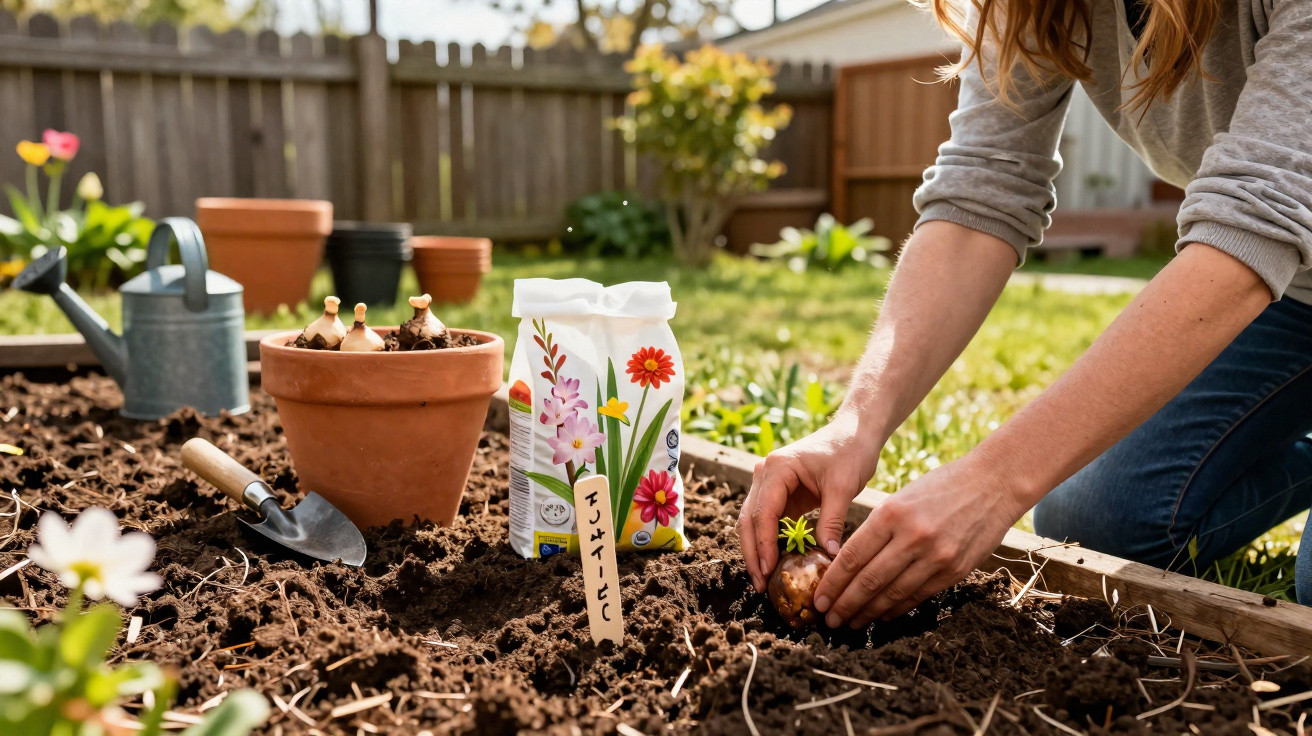
While plenty of amateur gardeners are still debating when to do the first cut of the lawn, seasoned pros are already focused on something else: summer bloomers that need to go into the ground now as tubers and bulbs. Gardening legend Alan Titchmarsh and plant expert Sarah Raven both swear by using March to lay the foundations for lavish borders from June through to August - with varieties that demand little effort yet deliver maximum impact.
Why March decides your summer flowering display
March is far more than a simple “in-between month”. Daylight stretches out, the soil gradually begins to thaw, and the sun gains strength. That is exactly the window summer-flowering tubers need, so they can quietly build roots before hotter weather arrives.
“Anyone who plants their summer bulbs and tubers by March at the latest gives them a lead of several weeks - and is rewarded with noticeably more and larger flowers.”
Most guides suggest a planting window from late February to early April. Even so, the rule of thumb remains: the sooner you plant after buying, the better. Bulbs left sitting too long in netting or a box can shrivel, go mouldy, or produce weak growth.
Well-established roots in spring later translate into:
- sturdy stems that do not flop over in the first gust of wind
- strong, sizeable flower heads
- a longer flowering season that can run into late summer
- less watering stress because plants take up moisture more efficiently
In professional horticulture, summer-flowering tubers are considered one of the simplest ways to create full, generous beds without constantly replanting. They are particularly helpful for beginners, because the workload stays manageable.
The most important summer-flowering tubers: these varieties should go in now
If you want to be standing in front of a sea of flowers in June, March is the moment to prioritise a handful of key performers. They bring height, colour and structure - and they are surprisingly easy to look after.
Tall showstoppers for beds and borders
For bold, tall planting schemes, specialists particularly recommend:
- Lilies - elegant, often scented blooms, ideal for sunny to partially shaded positions
- Gladioli - long flower spikes, excellent as cut flowers for a vase
- Freesias - more compact, but with an intense fragrance and vivid colours
- Montbretia (Crocosmia) - arching stems with fiery orange and red tones
All of these are sold as bulbs, corms or tubers, and an early start is repaid with especially reliable flowering.
Big flower heads for maximum impact
If you want truly standout blooms, add these in March too:
- Dahlias - from mini pompons to dinner-plate dahlias, perfect for extra-large flowers
- Ornamental allium (Allium) - spherical flower heads that seem to float above the border
- Begonias - generous, long-flowering plants for partially shaded corners and containers
- Bearded iris - distinctive blooms with a “beard”, happiest in sunny, relatively dry spots
A core professional tip: never dot bulbs around one by one. The effect is far stronger when you plant them in groups of four to six of the same variety. That creates blocks of colour that catch the eye from a distance.
“A border designed with fewer, but more generous groups looks calmer, more modern, and far more impressive than lots of scattered splashes of colour.”
Ideal for containers, balconies and small gardens
In cities and on compact terraces, you need varieties that cope well in pots over the long term. Alan Titchmarsh is especially fond of:
- Begonias - pack window boxes and hanging baskets with dense flowering
- Petunias - classic summer plants with a huge colour range
- Verbenas - flower for a long time and attract insects
- Rudbeckias - sun-loving, long-flowering plants with the familiar “coneflower” look
In balcony boxes and hanging baskets, these varieties mix beautifully. If horizontal space is limited, hanging baskets and wall brackets can add extra layers.
How to plant summer-flowering tubers properly: depth, spacing, position
The basic rule is simple: plant tubers and bulbs at roughly twice their own height. Large dahlia tubers therefore sit noticeably deeper than small allium bulbs.
| Type | Planting depth (approx.) | Spacing | Position |
|---|---|---|---|
| Lilies | 15–20 cm | 20–30 cm | Sun to partial shade |
| Dahlias | 10–15 cm | 40–60 cm | Full sun, warm |
| Gladioli | 10–15 cm | 10–15 cm | Sunny, sheltered from wind |
| Begonias | 5–8 cm | 20–25 cm | Partial shade |
Planting in the ground
Out in the garden, soil is the main consideration. Summer-flowering tubers prefer free-draining conditions and never sitting wet. If you have heavy clay, add a layer of grit or coarse sand in the planting hole so water drains away faster - particularly important for lilies.
Steps for planting in beds:
- clear the area of perennial weeds
- dig the hole and, if needed, work in grit
- place the tuber/bulb with the point facing upwards
- backfill, firm lightly, then water well
Planting in a pot
For containers, professionals favour large terracotta pots with at least one working drainage hole. Start with a drainage layer of broken pot shards or expanded clay, then add peat-free compost.
It also helps to leave a small watering lip at the rim - do not fill compost right to the top. That way water does not spill straight over the edge and moisture soaks through more evenly.
Watering, care and keeping the flowers coming
Once planted, the ongoing effort is surprisingly modest. More important than constant watering is the right rhythm: a thorough soak followed by time for the surface to dry.
- water generously straight after planting
- then wait until the top layer of soil feels slightly dry
- water less often but more deeply, rather than keeping things continually wet
- in pots, avoid waterlogging at all costs - empty saucers regularly
If you check, sharpen and oil your garden tools in March, you will not get slowed down later when quick maintenance jobs crop up. In summer, every cool evening matters when you need to water or remove spent flowers.
Hidden pests: why you should inspect tubers before planting
Tiny insects often hide between bulb scales and in the folds of some tubers: thrips. They overwinter on planting material and become active in spring.
“Thrips do not cause dramatic damage, but a slow, creeping one: misshapen buds, brown patches and silvery streaks on flowers and leaves.”
So, if you want borders that really perform, do not plant everything blindly just because it has been sitting in the shed.
Checking tubers before planting
A quick inspection now can prevent a lot of frustration later:
- use only firm, plump tubers; avoid anything soft or mouldy
- gently brush off loose skins and old root remnants
- cut out suspicious areas, or discard the piece entirely
Many experienced gardeners also spray tubers before planting. A tried-and-tested mix is 1 litre of water with 1 tablespoon of a mild soap solution (for example soft soap or gentle washing-up liquid). Mist the tubers, let them dry, and repeat the treatment after three days.
For gladioli, ranunculus or anemones, some specialists also recommend a soak of several hours in a diluted disinfectant solution. For tulips, daffodils or dahlias, however, this step is considered unsuitable, as they can be more sensitive.
If the damage is already in the border
If plants are showing deformed flowers, brown patches or silvery streaks, a multi-step approach is worthwhile:
- spray foliage in the evening with diluted soft soap
- set out yellow sticky traps to catch adult thrips
- remove badly distorted plants and do not put them on the compost
- dry any salvaged tubers well after the season and store them in the fridge at 2–4 °C
Old stock that has spent winter somewhere warm and dry - such as a garage or shed - should be checked especially carefully before reuse, or replaced altogether if in doubt.
What beginners often underestimate - and how to avoid mistakes
Many new gardeners do not fail because of the planting itself, but because of three common pitfalls:
- Planting too late: tubers only go in during May, start poorly and flower for a much shorter time.
- Wrong position: sun-lovers end up in permanent shade, while shade-tolerant varieties get scorched in fierce midday sun.
- Waterlogged compost/soil: especially in pots, plants quickly decline if water is left standing in the saucer.
If you make a clear plan early in the year, you can sidestep these traps. A simple sketch of the border helps you keep to spacing and groupings. When in doubt, choose fewer varieties and plant bigger groups.
It is also practical to add small plant labels straight after planting - especially with dahlias and begonias, which can be slow to shoot. Then, in early summer, you still know where not to hoe or squeeze in extra plants.
Getting more from your garden: combinations and re-use
Summer-flowering tubers combine well with early-flowering perennials or biennials. While tulips and daffodils take centre stage in April, dahlias, gladioli and the rest are quietly building roots in the background.
Later on, the summer stars take over as the spring bulbs die back. In this way, the same area stays attractive almost continuously, without the need for constant replanting.
If you garden with containers, you can lift some tubers after the season, dry them and store them somewhere cool. Others - including certain begonias - can be overwintered indoors without difficulty. Over time you build up a personal collection of favourites, and the March moment when they go back into the soil becomes a regular ritual.
Comments
No comments yet. Be the first to comment!
Leave a Comment