
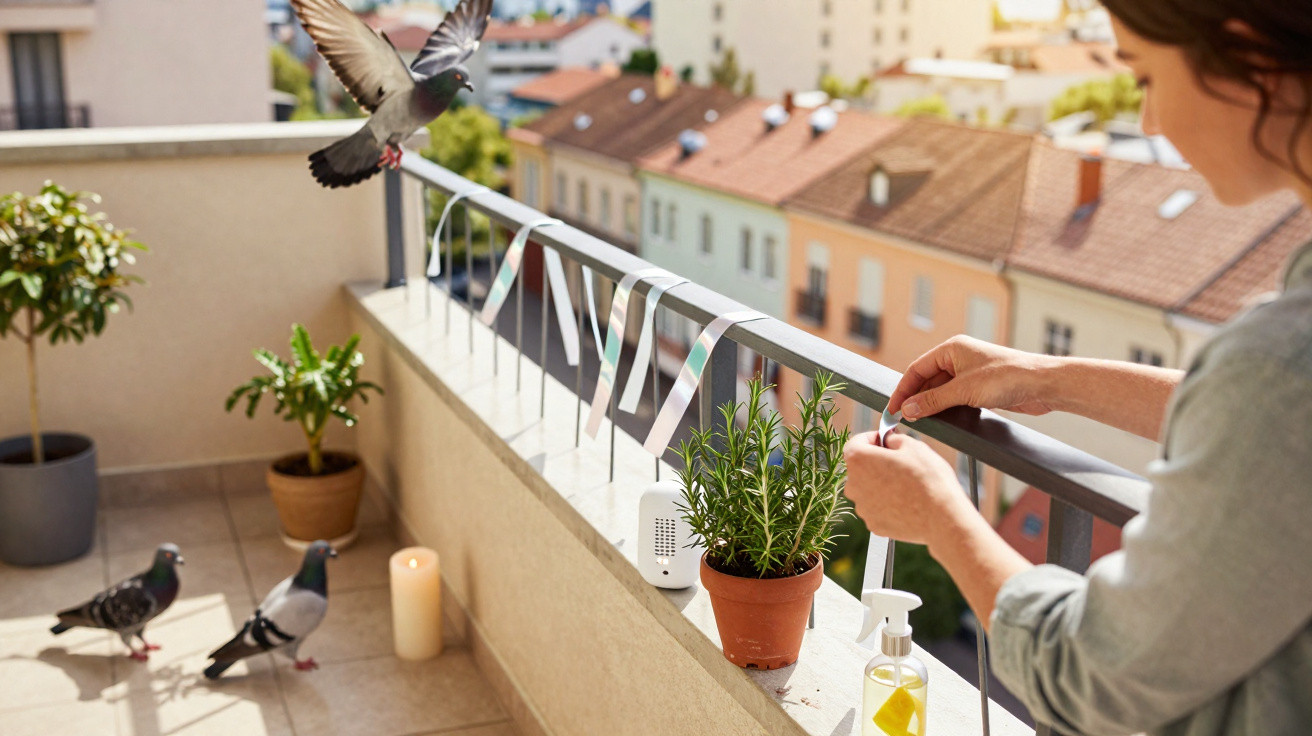
City living has its downsides: your balcony or terrace could be a little haven if it weren’t for persistent pigeons and their corrosive droppings. For one resident, it became almost a weekly cleaning rota - until she combined a handful of straightforward measures, with unexpectedly good results.
Why pigeons love your balcony in the first place
Before you try to shift the birds, it helps to understand what draws them in. Pigeons aren’t acting at random - they tend to follow a predictable pattern. Once you know what they’re looking for, you can tackle the cause rather than the symptom.
- Food within easy reach: crumbs, barbecue leftovers, bird seed or unsealed rubbish bags can feel like an open invitation.
- Convenient landing spots: window ledges, railings and small wall projections are ideal places to perch and rest.
- Sheltered corners: covered balconies, roof recesses or areas beneath awnings provide protection from rain and predators.
"If you make your own balcony unattractive to pigeons, you solve 80 per cent of the problem - often without any high-tech kit or poison."
The woman who had been scrubbing her terrace every week had exactly this mix: leftover breakfast outside, wide railings, and a partly covered section. Only when she changed those conditions did the birds gradually stop coming.
The turning point: cleaning on its own isn’t enough
Many people assume that diligent cleaning will sort it out. In reality, cleanliness matters, but it doesn’t replace proper deterrence. Freshly cleaned surfaces don’t bother pigeons much - they’ll keep returning as long as the space still suits them.
What she changed
She continued to clean the terrace regularly, but the real shift came from pairing three simple actions:
- removing every food source consistently
- altering landing and perching areas
- using specific smells and reflections that pigeons tend to avoid
That combination was what made the difference. And it’s not limited to one particular terrace - it can work on almost any balcony, whether you’re on the fifth floor or at ground level.
Food first: the non-negotiable step when pigeons are a nuisance
Pigeons return to places where they can feed safely. Remove the easy buffet and visits usually drop sharply.
- Don’t leave leftovers out: clear up straight after breakfast; brush away roll crumbs and snack scraps.
- Be strategic with bird feed: if you want to feed smaller songbirds, use hanging feeders that larger pigeons struggle to access.
- Keep rubbish sealed: open bin bags or food-waste bins with a loosely fitted lid are especially tempting.
In her case, she also moved potting soil and seeds into lidded boxes. That stopped the birds from rummaging in pots and finding hidden morsels.
Uncomfortable surfaces: how to make your balcony "pigeon-hostile"
Pigeons favour stable, broad areas where they can land confidently and sit undisturbed. Disrupt those comfort zones and they’ll often relocate to the next building.
Simple structural tweaks
- Anti-bird spike strips: narrow rails fitted with plastic or metal spikes on window sills and railings stop landings without injuring birds.
- Tensioned lines and wires: thin wires pulled tight along ledges make the surface feel unstable. Pigeons avoid uncertain footing.
- Smooth covers: slim plexiglass sheets on wide ledges create a slippery surface - uncomfortable to land on and therefore unattractive.
"The more uncomfortable the favourite spot, the faster pigeons give up and look for a new location."
On the heavily affected terrace, a few discreet wires along the railing and two plexiglass strips on the wall were enough to effectively “remove” the birds’ preferred perches.
What pigeons can’t stand to smell: natural scent-based tricks
Plenty of people rely on deterrents that irritate pigeons through smell. Results vary by location, but alongside other methods they can be surprisingly effective.
Household remedies that can help
- Vinegar solution: mix water and clear household vinegar at roughly 1:1 in a spray bottle. Apply several times a week to typical landing areas and corners.
- Spices: sprinkling hot pepper, curry powder or cinnamon on window ledges or in planters deters many pigeons.
- Strong-scented plants: shrubs and herbs such as rosemary, geraniums or mint may smell pleasant to people but are often off-putting to pigeons.
She placed several pots of strongly scented mint and geraniums along the balcony edge. Combined with vinegar spray on the railings, pigeon visits noticeably decreased within a few days.
Reflections and movement: pigeons dislike surprises
Pigeons can be sensitive to sudden flashes of light and unfamiliar movement. You can use that to your advantage without spending much.
What has proved effective
- Hanging reflectors: old CDs, shiny metal strips or purpose-made reflective tape create unsettled flashes of light in the wind.
- Pinwheels: colourful pinwheels in planters add rotating movement and soft noise - often unpleasant for pigeons.
- Predator decoys: fake birds of prey or owls can work short term, but they need moving regularly or pigeons will get used to them.
On the terrace in question, two bright pinwheels plus a few reflective strips attached to the awning were enough to make approaches feel unpredictable for the birds.
Technology to deter pigeons: when devices are worth it
If the problem is severe, people often turn to technical aids. Options range from ultrasonic units to specialist balloons.
Acoustic systems
Ultrasonic devices emit sounds that humans can’t hear but are meant to disturb pigeons. Their effectiveness depends heavily on placement and they may also bother other animals. In densely built-up areas - or if you have pets indoors - it’s wise to research carefully first.
Visual scare devices
Large balloons with painted eyes or plastic birds of prey can be set up on balconies. They mimic predators and confuse pigeons, particularly if you keep repositioning them slightly.
"Technology rarely solves everything on its own - it strengthens other measures, but it doesn’t replace them."
Structural solutions: when nothing else works
In buildings that are repeatedly affected, owners sometimes opt for long-term physical changes.
Protective nets and barriers
- Nets fitted across balconies: these close off the area and prevent access entirely. Not everyone likes the look, but they are highly effective.
- Sealing cavities: open roof overhangs, recesses or shafts should be secured with grilles or covers so pigeons can’t nest there.
Especially in older properties, it’s worth looking upwards: the birds may not only be sitting on the balcony - they may be nesting in gaps around the roofline. Properly blocking those entry points often reduces pressure on balconies significantly.
Legal limits: what you can do - and what you can’t
Trying to deal with pigeons can quickly touch on animal welfare law and local rules.
- No feeding pigeons in town centres: many councils ban intentional pigeon feeding. Ignoring this can lead to fines.
- No violence: traps, poison, or deliberately injuring birds are prohibited. Only deterrent measures that don’t kill are allowed.
If you’re unsure, ask your local council or the relevant enforcement office before installing anything extensive.
Practical everyday tips for balconies and terraces
To achieve the kind of improvement seen on the terrace mentioned at the start, it helps to follow a clear plan. One possible checklist:
- Remove all food sources and avoid creating new ones.
- Modify perching and landing areas with wires, spike strips or smooth covers.
- Combine scent and light measures (vinegar, spices, plants, reflections) deliberately.
- Clean regularly but without panic - frequent short cleans are better than rare long sessions.
- If the problem is heavy, consider nets or further structural solutions.
Anyone who sticks to these steps can make a balcony uninteresting to pigeons while keeping it far more pleasant for people. As many residents discover, pigeons adapt - but they also prefer the easy option. When a spot becomes too awkward and uncomfortable, they will usually move to another roof quite quickly.
Comments
No comments yet. Be the first to comment!
Leave a Comment